
Convotherm ConvoVent Mini Condensation Hood
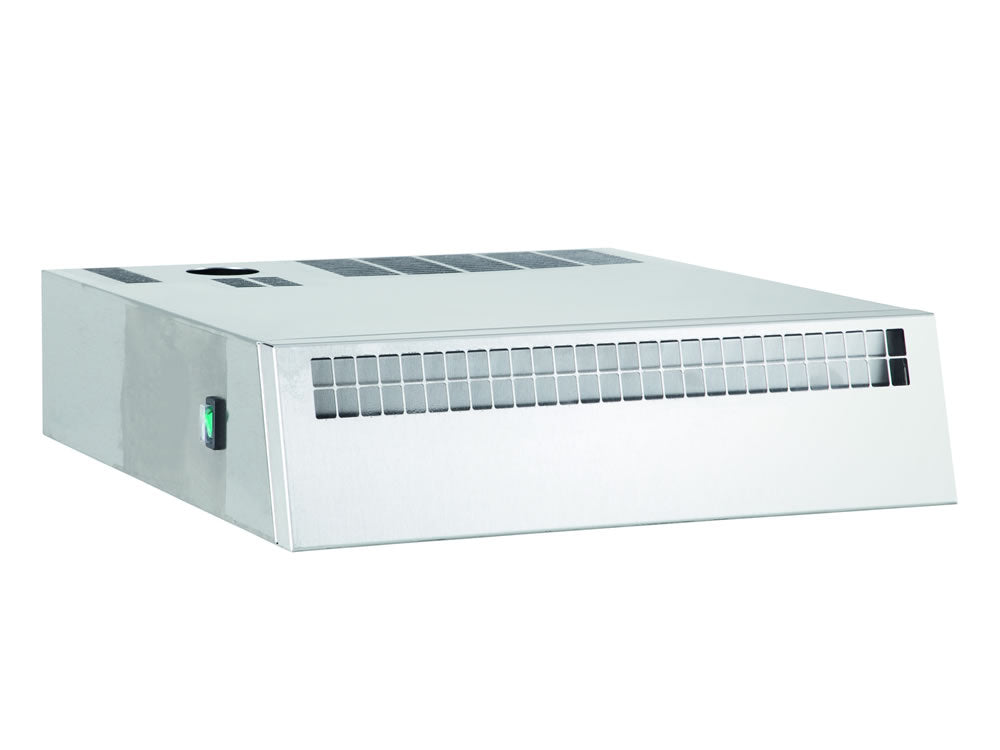
Product Description
The Convotherm ConvoVent Mini is a condensation management hood designed specifically for use with the Convotherm mini range of combi ovens. Rather than routing steam to an external duct, it...
Specifications
Downloads
Product Description
The Convotherm ConvoVent Mini is a condensation management hood designed specifically for use with the Convotherm mini range of combi ovens. Rather than routing steam to an external duct, it captures the vapour expelled during cooking cycles, condenses it internally, and returns the treated air to the kitchen. For sites where traditional ducted extraction is impractical — whether due to building constraints, planning restrictions, or tenancy agreements — it provides a straightforward way to deal with steam directly at the point of emission.
In service, compact combi ovens positioned in tight or enclosed spaces can generate meaningful levels of steam and humidity, particularly during back-to-back cooking cycles. The ConvoVent Mini addresses this directly, helping to keep the immediate working environment more comfortable and reducing moisture build-up on surrounding surfaces and equipment. It operates via the oven's own on/off switch and requires no cold-water connection, which keeps installation and daily operation uncomplicated.
- Captures and condenses steam at source — no external ducting required
- No cold-water connection needed, simplifying installation significantly
- Operates from the oven's own switch — no separate controls to manage
- Suitable for retro-fitting to compatible Convotherm mini models
- Reduces ambient humidity and surface moisture in the surrounding area
It is important to be clear about what this unit is and is not. The ConvoVent Mini is a condensation hood, not a full extraction canopy. It is not designed to handle grease-laden air produced by open cooking and should not be treated as a substitute for a full ventilation system where one is required under building regulations or environmental health guidance. It is best suited to operations using the Convotherm mini purely for combi oven cooking, where steam rather than grease is the primary concern.
If you are working through a kitchen layout where ventilation options are limited, or you are uncertain whether this unit fully covers your requirements, it is worth having a conversation before you proceed — ventilation is one area where getting it wrong can create real problems further down the line.
Key Features
- Ductless condensation system captures and treats steam internally
- Operates directly from the combi oven's own on/off switch
- Requires no cold-water connection for installation or operation
- Designed specifically for the Convotherm mini combi oven range
- Suitable for retro-fitting to compatible existing Convotherm mini units
Operational Benefits
- Allows combi oven use where ducted extraction is not feasible
- Reduces humidity build-up in tight or enclosed kitchen spaces
- Simplifies installation with no additional pipework or controls needed
- Keeps surrounding surfaces drier during sustained back-to-back cooking
- Helps operators meet practical ventilation needs within tenancy constraints
Specifications
Downloads
Frequently Asked Questions
- No — it is a condensation hood, not a full extraction canopy. It is designed to manage steam produced by the Convotherm mini during combi oven cooking and is not suitable for handling grease-laden air from open cooking. Where building regulations or environmental health requirements specify a full extraction system, this unit does not fulfil that obligation.
- Because it operates without external ducting or a cold-water connection, installation is relatively straightforward compared with conventional extraction. It connects to the Convotherm mini's own power supply and is controlled via the oven's switch, so no separate electrical or plumbing trades are required for the hood itself. That said, it is always worth confirming compatibility with your specific oven model before ordering.
- The ConvoVent Mini is designed for use with the Convotherm mini range of combi ovens and can be retro-fitted to compatible models. If you are unsure whether your existing unit or a planned purchase is supported, it is worth checking with us before you commit — fitting an incompatible hood can cause practical problems that are straightforward to avoid at the selection stage.