
Roller Grill 400 CSG Gas Crêpe Machine | LPG
Product Description
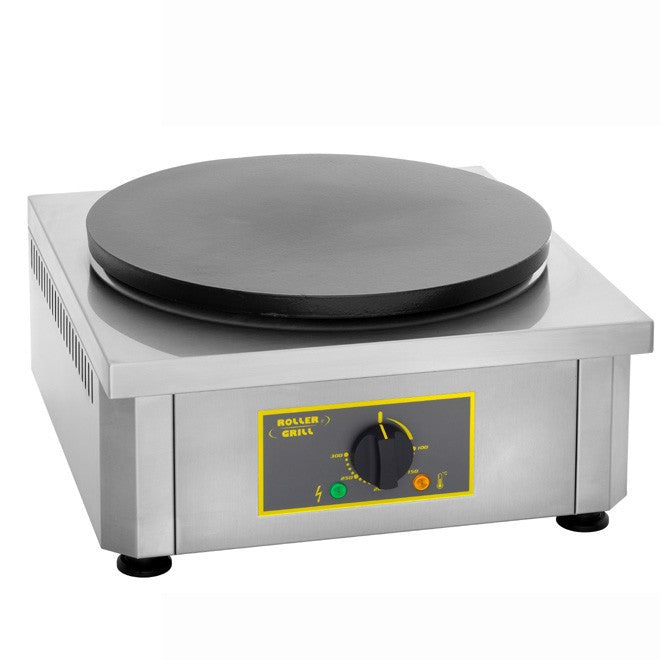
The Roller Grill 400 CSG is a standalone gas crêpe machine built around a 400mm diameter cast iron cooking plate with a hard enamel finish. It runs on LPG rather...
Specifications
- Cooking surface area
- 400mm
- External depth mm
- 500
- External height mm
- 240
- External width mm
- 450
Product Description
The Roller Grill 400 CSG is a standalone gas crêpe machine built around a 400mm diameter cast iron cooking plate with a hard enamel finish. It runs on LPG rather than mains electricity, which removes the need for a fixed power connection and makes it a practical option wherever a reliable electrical supply is not guaranteed.
The cast iron plate's enamel surface provides consistent non-stick performance without requiring heavy seasoning or specialist preparation before each service. Beneath the plate, a spiral heating element distributes heat evenly across the full cooking surface — a detail that matters more than it might appear, since uneven heat is one of the most common causes of inconsistent crêpes when working at pace during a busy period. The flat plate format also handles blinis and chapattis reasonably well, which gives operators a degree of menu flexibility.
In practical terms, this machine is suited to lower-to-moderate volume service rather than sustained high-throughput production. It is commonly used at food markets, outdoor events, pop-up catering operations, and cafés where crêpes form part of a broader menu rather than the sole focus.
- LPG operation removes reliance on a fixed mains electrical connection
- Hard enamel cast iron plate gives consistent non-stick results from service to service
- Spiral element distributes heat evenly, reducing hot spots across the cooking surface
- Compact and portable format suits mobile and temporary catering setups
- Straightforward to operate, with minimal training required for new staff
Setup requirements are modest — a stable surface and a compatible LPG supply are the main prerequisites. It is worth confirming that your gas regulator and hose fittings are compatible before first use, particularly if the unit will be moving between different event locations.
For operators running crêpes as a core high-volume item, or working within a fixed commercial kitchen with reliable power, a larger or electrically powered model may be better matched to the demands involved.
If you are weighing up whether this model suits your setup and service style, the team is happy to talk it through with you.
Key Features
- 400mm diameter cast iron plate with hard enamel non-stick finish
- LPG gas operation requires no fixed mains electrical connection
- Spiral heating element distributes heat evenly across the full plate
- Standalone compact format designed for mobile and event use
- Flat plate surface suitable for crêpes, blinis and chapattis
Operational Benefits
- Operates without mains power, keeping setup flexible at any venue
- Even heat reduces cooking inconsistencies during busy service periods
- Enamel plate requires minimal preparation, speeding up service readiness
- Portable format makes it practical to move between event locations
- Simple operation allows staff to produce consistent results quickly
Specifications
- Cooking surface area
- 400mm
- External depth mm
- 500
- External height mm
- 240
- External width mm
- 450
- Weight kg
- 23.0
Frequently Asked Questions
- The 400 CSG is best suited to lower-to-moderate volume service rather than sustained continuous production. For operators where crêpes are the primary high-volume menu item and demand is constant throughout a long service period, a larger or higher-output model is likely to be a better fit.
- The unit runs on LPG. Before first use, it is important to confirm that your regulator and hose fittings are compatible with the machine's gas inlet, particularly if the unit will be used across multiple event setups where gas supply configurations may differ.
- It can, though its LPG operation and compact format mean it is primarily designed with mobile and event catering in mind. Operators running a fixed kitchen with a reliable mains supply may find an electric model offers more consistent heat control and easier integration into a permanent setup.