
Pastaline Automatic Dough Divider & Rounder System
Product Description
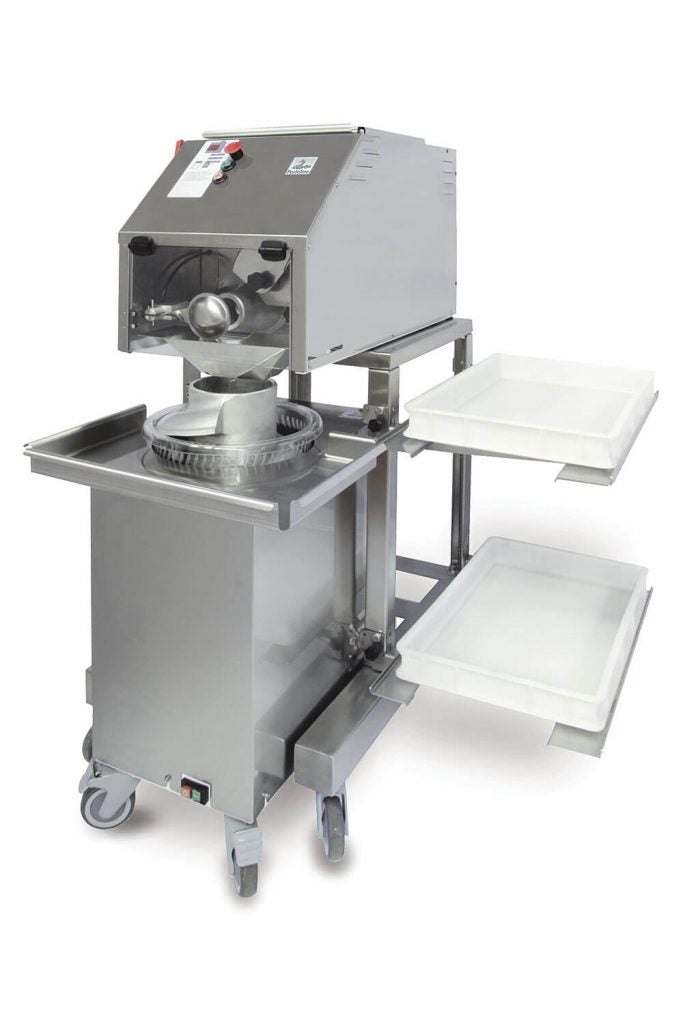
This Pastaline system pairs an automatic dough divider with a dough rounder on a shared stand, creating a continuous workflow from bulk dough through to portioned, rounded balls ready for...
Specifications
Downloads
Product Description
This Pastaline system pairs an automatic dough divider with a dough rounder on a shared stand, creating a continuous workflow from bulk dough through to portioned, rounded balls ready for proofing or shaping. The divider portions by weight, and the rounder forms each piece into a tight, uniform ball — either on a timed cycle or via a feeler pin mechanism that responds to dough consistency. Mounting both machines on a combined stand with integral shelving keeps the footprint contained and the process linear.
In any kitchen producing dough-based products at volume, manual portioning introduces inconsistency that compounds across a long production run. This system removes that variable. The rounder handles a practical range of dough weights, making it usable across different product sizes — from small bread rolls to larger pizza bases — without reconfiguring the line. Throughput is sufficient to keep pace with serious production demands without creating a bottleneck ahead of the oven or proofing cabinet.
The operational advantages for a working kitchen include:
- Consistent portion weight reduces food cost variance and dough waste across a run
- Uniform ball formation supports even proofing and more predictable bake results
- Labour requirement at the portioning stage is significantly reduced
- Quick-disassembly components keep daily cleaning manageable
- Combined stand positions both machines at working height and preserves bench space
Each machine in the system requires its own electrical supply, so your installation planning should confirm available socket positions near the intended location. Both units carry meaningful weight, and the combined stand assumes a fixed position rather than regular repositioning — siting the system close to your proofing area and dough preparation space will make the most of the linear workflow. Floor loading and access for thorough cleaning should also be considered before installation.
This system is well suited to pizzerias, artisan bakeries, hotel production kitchens, and contract catering operations where dough-based products are produced consistently at volume. It makes most sense where manual portioning is already creating a measurable labour or consistency problem. For lower-volume sites, a standalone manual divider or simpler rounder may be more proportionate. For very large central production facilities, heavier-duty dedicated equipment is worth considering.
If you would like to talk through whether this configuration is the right fit for your production volumes and kitchen layout, our team is glad to help before you make a decision.
Key Features
- Automatic weight-based dough dividing for consistent portioning across production runs
- Dough rounder with timed cycle or feeler pin mechanism to suit dough consistency
- Handles a wide dough weight range without reconfiguring the line between products
- Combined stand with integral shelving keeps both machines at correct working height
- Quick-disassembly design on both units supports efficient daily cleaning routines
Operational Benefits
- Removes portion inconsistency across long production runs and high-volume bake days
- Uniform ball formation leads to more even proofing and predictable finished results
- Reduces manual labour at the portioning stage, freeing staff for other kitchen tasks
- Linear workflow from divider to rounder minimises handling time between stages
- Compact combined footprint allows the system to fit within a defined production area
Specifications
Downloads
Frequently Asked Questions
- It is most at home in operations producing dough-based products regularly and at volume — pizzerias, artisan bakeries, hotel kitchens, and production catering facilities are the most common fits. It is less suited to sites where dough products are made occasionally or in small quantities, where a simpler manual approach is likely more practical.
- Each machine requires its own electrical supply, so socket availability near your intended location needs to be confirmed beforehand. The combined stand is designed for a fixed position rather than regular movement, so it is worth planning the placement carefully — ideally close to your proofing and dough preparation area to make the most of the workflow. Floor space, weight distribution, and access for cleaning around the base of the stand should all factor into your siting decision.
- The rounder is designed to work across a practical range of dough weights, so switching between product sizes — for example, between bread rolls and pizza bases — does not require significant reconfiguration. That said, very different dough hydration levels or enriched doughs may behave differently through the rounding stage, and it is worth discussing your specific products with us if you have any uncertainty.