
Lincat BS7W Wet Heat Bain Marie with Round Pots
Product Description
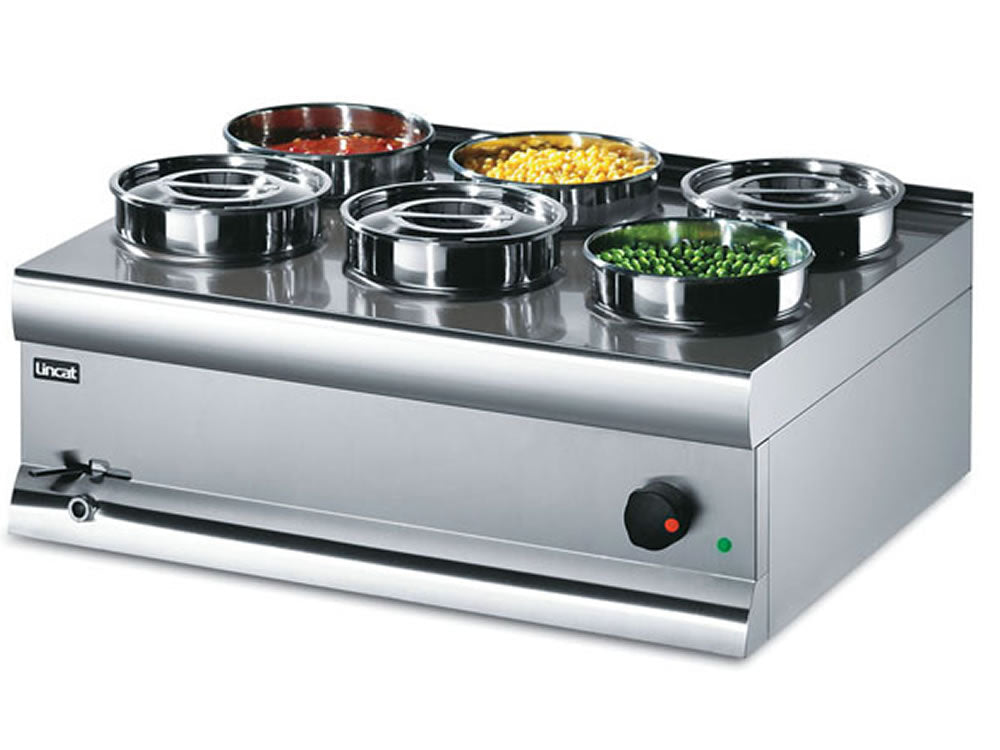
The Lincat BS7W is an electric wet heat bain marie supplied with six stainless steel round pots. Its purpose is to hold liquid-based and moisture-sensitive foods — soups, sauces, gravies...
Specifications
- External depth (mm)
- 600
- External height (mm)
- 290
- External width (mm)
- 750
- Power rating (kw)
- 2
Product Description
The Lincat BS7W is an electric wet heat bain marie supplied with six stainless steel round pots. Its purpose is to hold liquid-based and moisture-sensitive foods — soups, sauces, gravies and pre-cooked dishes — at safe serving temperatures throughout a service period. Rather than applying dry radiant heat directly to the pot base, wet heat operation surrounds the pots with a warm, humid environment, which makes a practical difference to food quality over an extended hold.
In a working kitchen, that distinction is worth understanding. Sauces and soups held in a dry well unit will often skin over or dry at the edges within an hour or two. The wet heat method maintains consistent moisture around the pots, reducing the need for staff to repeatedly stir or attend to the food. Recovery after pots are replenished or disturbed is reasonably prompt, which helps keep a busy pass or servery moving without interruption.
From a day-to-day operational standpoint, the BS7W offers:
- Adjustable heat control to suit different food types and holding requirements
- Six round pots providing good variety across a servery or hot pass
- Stainless steel construction that cleans down quickly between services
- Wet heat action that reduces drying, skinning and crusting during extended holds
- A compact footprint suited to smaller counters and servery setups
Installation is straightforward — the unit is electric and requires a suitable socket at the point of use. It is worth confirming counter space and power availability before ordering. Wet heat units do draw slightly more energy than dry well equivalents over a full service day, which is worth bearing in mind for sites with long operating hours.
The BS7W is well suited to pub kitchens, hotel carveries, school canteens and café serveries where a modest range of dishes needs to be held reliably through lunch or dinner service. For operations running larger batch volumes, more serving positions, or all-day service, a higher-capacity unit may be a better fit.
If you would like to talk through whether this unit is the right match for your counter layout or service pattern, the team is glad to help before you place an order.
Key Features
- Wet heat operation surrounds pots with humid warmth throughout service
- Supplied with six stainless steel round pots for varied menu holding
- Adjustable heat control to suit soups, sauces, gravies and pre-cooked dishes
- Electric operation requiring a standard socket at the point of use
- Compact countertop footprint suitable for servery and hot pass positions
Operational Benefits
- Reduces skinning and drying on soups and sauces during extended holds
- Maintains consistent food quality with less staff intervention at the pass
- Six pot configuration supports a varied menu across a single service counter
- Prompt recovery after replenishment keeps service moving without disruption
- Stainless steel construction allows fast, thorough cleaning between services
Specifications
- External depth (mm)
- 600
- External height (mm)
- 290
- External width (mm)
- 750
- Power rating (kw)
- 2
- Power type
- Electric 1 Phase
- Weight (kg)
- 26
Frequently Asked Questions
- For liquid-based foods such as soups, gravies and sauces, wet heat is generally the more practical choice. The humid environment around the pots prevents the surface drying, skinning and edge crusting that can occur in a dry well unit over a long service period, which reduces the attention staff need to give those dishes at the pass.
- The unit is electric and needs a suitably rated socket at the point of use on your counter or servery. There are no gas or water connections required. It is worth confirming you have adequate counter space and that your electrical supply can support the unit, particularly if other equipment is drawing from the same circuit.
- The BS7W is well suited to moderate-volume operations — pub kitchens, carveries, school canteens and café serveries running a defined service period. For kitchens running all-day service, holding larger batch volumes, or requiring more serving positions simultaneously, it would be worth considering a higher-capacity unit to ensure consistent performance throughout the day.