
Cambro UPCS160480 S-Series Camcarrier Insulated Food Carrier
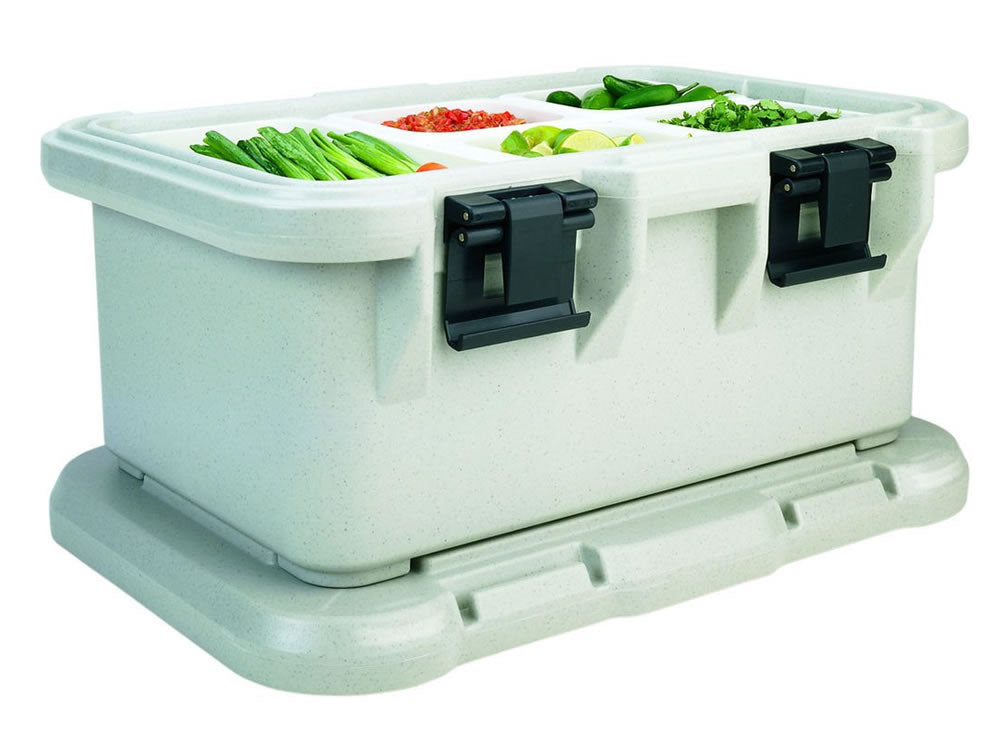
Product Description
The Cambro UPCS160480 is a top-loading insulated food carrier from the S-Series Camcarrier range, built to transport hot food safely between preparation areas, service points, or off-site locations. It accepts...
Specifications
- External depth (mm)
- 435
- External height (mm)
- 260
- External width (mm)
- 640
- Weight (kg)
- 9
Downloads
Cambro UPCSS160 Stack Store BrochureProduct Description
The Cambro UPCS160480 is a top-loading insulated food carrier from the S-Series Camcarrier range, built to transport hot food safely between preparation areas, service points, or off-site locations. It accepts a single full-size gastronorm pan at 150mm depth and uses a polyurethane foam core within a polypropylene shell — a straightforward construction with a long track record in commercial catering.
These carriers are a common sight in contract catering, event catering, school meal delivery, and satellite kitchen operations where food needs to travel without losing temperature. The built-in seal and wide nylon latches provide a consistent close that helps retain heat during transit, reducing the risk of food falling below safe holding temperatures before service begins.
From an operational standpoint, the design is practical rather than complicated:
- Moulded handles on all four sides keep the unit manageable when fully loaded
- Interlocking base allows units to stack securely during storage or vehicle loading
- Lightweight construction relative to insulated metal alternatives reduces handling fatigue on longer runs
- No power source required, simplifying compliance with food transport temperature requirements
There are no electrical or plumbing requirements. The carrier is entirely passive, so setup amounts to loading and latching. It is worth noting that passive insulation has limits — these units are suited to transit and short-term holding rather than extended service periods, and pre-heating the carrier before loading will meaningfully extend effective holding time.
This model is well suited to operators running smaller-volume deliveries, satellite service points, or occasional outside catering where one or two pans need to travel reliably. Operations moving larger quantities of food on a regular basis may find a higher-capacity multi-pan carrier better suited to their needs.
If you are weighing up whether this size fits your service pattern or delivery frequency, the team is happy to talk it through before you commit.
Key Features
- Top-loading design accepts a single full-size 150mm deep gastronorm pan
- Polyurethane foam core within polypropylene shell for reliable passive insulation
- Wide nylon latches and built-in seal deliver a consistent, secure close
- Moulded handles on all four sides for stable grip when fully loaded
- Interlocking base allows secure stacking during storage or vehicle loading
Operational Benefits
- Maintains food at safe holding temperatures throughout transit and short-term holding
- Reduces handling fatigue on longer delivery runs versus heavier metal alternatives
- Pre-heating the carrier before loading extends effective heat retention at service
- No power source needed, keeping food transport logistics simple and flexible
- Secure stacking keeps multiple units stable during vehicle loading and unloading
Specifications
- External depth (mm)
- 435
- External height (mm)
- 260
- External width (mm)
- 640
- Weight (kg)
- 9
Downloads
Cambro UPCSS160 Stack Store BrochureFrequently Asked Questions
- It is not mandatory, but it makes a practical difference. Loading hot food into a cold carrier causes the insulation to absorb heat from the food before it begins retaining it, which shortens effective holding time. Filling the carrier with hot water for a few minutes before service, then emptying and loading, meaningfully extends how long food stays at a safe temperature during transit.
- Holding time depends on the starting temperature of the food and the carrier, ambient conditions, and how often the lid is opened. As a passive unit, it is designed for transit and short-term holding rather than extended service periods. For longer holding requirements, an electrically heated hotbox would be a more appropriate solution.
- It is well suited to regular use in lower-volume operations — satellite service points, school meal runs, or outside catering where one or two pans need to travel reliably each day. If you are running high-frequency deliveries with multiple pans per run, it is worth considering a higher-capacity carrier to reduce the number of units in circulation.