
IMC IP400 Freestanding Waste Compactor
Product Description
The IMC IP400 is a freestanding waste compactor built for commercial catering environments where the volume of refuse generated during service creates a genuine operational burden. It works by compressing...
Specifications
- Capacity (kg)
- 3000
- External depth (mm)
- 600
- External height (mm)
- 1645
- External width (mm)
- 580
Downloads
Imc IP400 Waste Compactor SpecificationsProduct Description
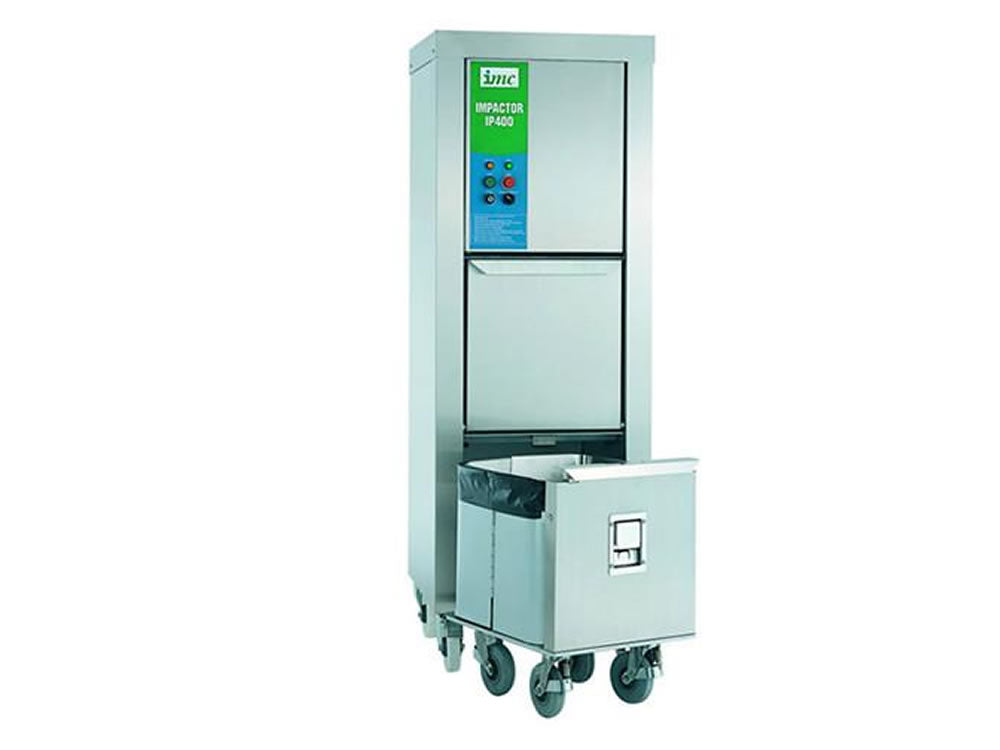
The IMC IP400 is a freestanding waste compactor built for commercial catering environments where the volume of refuse generated during service creates a genuine operational burden. It works by compressing bagged waste under significant force, substantially reducing the physical volume of each bag and cutting the number of bag changes required during a busy shift. A bag-full indicator takes the guesswork out of the process, and the unit operates on a short cycle so it keeps pace with continuous waste generation without creating a bottleneck in the back-of-house.
In a working kitchen, waste handling is rarely treated as a priority until it becomes a problem — overflowing bins, constant interruptions to change sacks, and bulky refuse stacking up before collection all have a real impact on workflow and hygiene. A compactor addresses this directly. Fewer bag changes during service means less disruption, and a meaningful reduction in waste volume means lower collection frequency, which cuts costs over time.
- Reduces waste volume significantly, lowering bag changes and collection frequency
- Short cycle time keeps pace with waste generation during continuous service
- Bag-full indicator supports consistent handling across all back-of-house staff
- Supplied with wheeled trolley, tying tool, and starter bag stock — ready to use
- Freestanding design allows flexible positioning in waste or back-of-house areas
Because the IP400 is freestanding, it does not require structural fixings or specialist installation. That said, the location still warrants thought — the trolley needs adequate clearance to manoeuvre, the floor surface should be suitable, and a power supply needs to be accessible nearby. The unit is not designed as a permanent built-in installation, which keeps deployment straightforward but does mean it is not the right choice for operations that need an integrated or very high-capacity solution.
The IP400 is well suited to mid-sized restaurants, pub kitchens, contract catering operations, and similar sites where waste is a consistent issue but the volume does not justify a larger, more permanent compactor. For very high-volume environments — large hotel kitchens, event catering, or central production units — a heavier-duty model may handle throughput more effectively.
If you are working through whether the IP400 fits your operation or want to talk through the options for your site, the team is happy to help you think it through.
Key Features
- High-force compaction significantly reduces the volume of each waste bag
- Short operating cycle processes bags quickly during continuous service
- Bag-full indicator alerts staff when changeover is required
- Supplied with wheeled trolley, tying tool, and initial bag stock
- Freestanding design requires no structural fixings or specialist installation
Operational Benefits
- Fewer bag changes during service reduces back-of-house disruption and workflow breaks
- Lower waste volume cuts collection frequency and associated contractor costs over time
- Bag-full indicator ensures consistent waste handling regardless of staff experience
- Wheeled trolley allows easy repositioning and safe bag transport to collection points
- No fixed installation needed, so the unit can be deployed where it is most useful
Specifications
- Capacity (kg)
- 3000
- External depth (mm)
- 600
- External height (mm)
- 1645
- External width (mm)
- 580
- Power rating (kw)
- 3
- Power type
- Electric 1 Phase
- Weight (kg)
- 223
Downloads
Imc IP400 Waste Compactor SpecificationsFrequently Asked Questions
- The IP400 is well matched to mid-sized operations such as restaurants, pub kitchens, and contract catering sites where waste volume is a consistent issue but not extreme. For very high-volume environments — large hotel kitchens, central production units, or event catering — it is worth considering a heavier-duty model that can handle greater throughput more comfortably.
- No specialist installation is required. The unit is freestanding and does not need structural fixings, drainage, or a gas connection. You will need a suitable power supply nearby, sufficient floor space for the unit and trolley to operate, and a floor surface that supports the weight during use. Most sites can have it operational quickly without contractor involvement.
- Commercial operators in the UK are required to manage and segregate waste appropriately, and a compactor supports this by reducing the bulk of general refuse, making storage and handling more manageable between collections. Fewer overfilled or split bags also reduces the risk of hygiene issues in back-of-house and external waste areas, which can be relevant during environmental health inspections.