
Lincat LCO Countertop Electric Convection Oven
Product Description
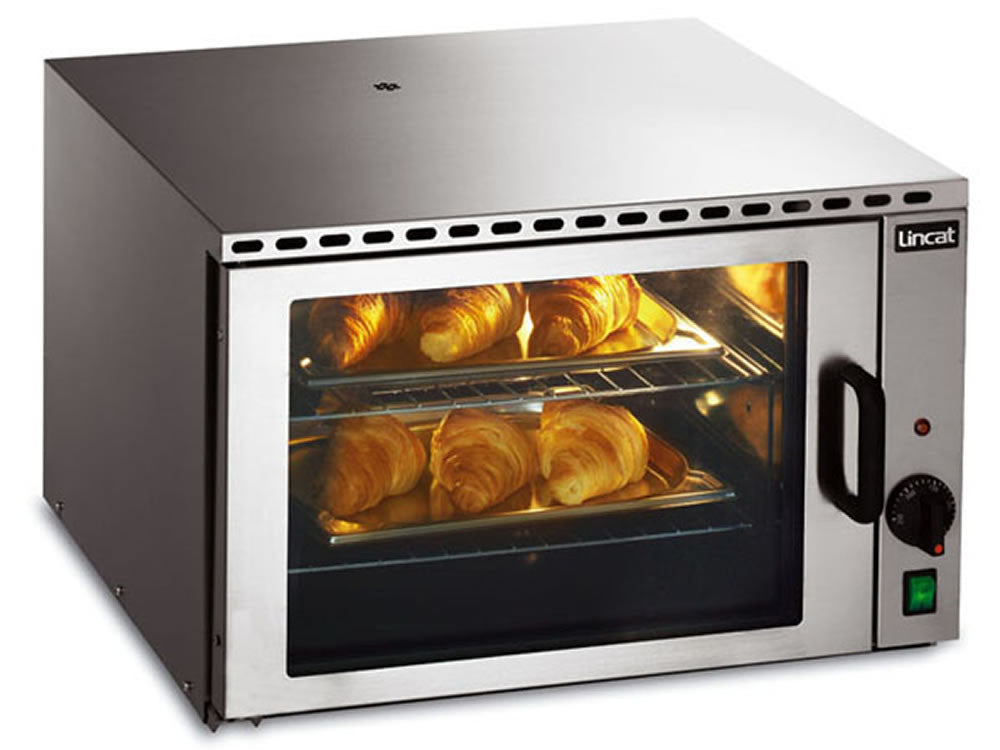
The Lincat LCO is an electric fan-assisted convection oven designed to sit on a countertop in a commercial kitchen. A circulating fan distributes heat evenly around the cavity throughout the...
Specifications
- External depth (mm)
- 488
- External height (mm)
- 371
- External width (mm)
- 555
- Internal depth (mm)
- 320
Product Description
The Lincat LCO is an electric fan-assisted convection oven designed to sit on a countertop in a commercial kitchen. A circulating fan distributes heat evenly around the cavity throughout the cooking cycle, which improves batch consistency and reduces the likelihood of hot spots that are common in static ovens. It comes supplied with two wire racks, manual temperature and timer controls, and a glazed door with an illuminated interior so operators can monitor progress without opening the door and losing heat.
In practice, fan-assisted circulation makes batch cooking noticeably more predictable. Trays load more evenly, recovery after the door is opened tends to be quicker than with a static oven, and consistent results across a batch reduce the need to rotate or reposition trays mid-cook. The countertop format keeps the floor clear, which matters in smaller kitchens where every square metre is accounted for.
- Even air circulation reduces tray rotation and improves batch consistency
- Illuminated cavity allows progress checks without opening the door and losing heat
- Countertop installation preserves floor space for other equipment
- Manual controls are simple to operate and straightforward to clean around
- Supplied with two wire racks, ready to use from the outset
Installation is straightforward for an electric unit, though it is worth confirming your available supply is suitable before ordering. The oven should be sited on a stable, heat-resistant surface with adequate clearance at the sides and rear for ventilation. It is not designed for continuous high-output service, and operations with heavy, sustained throughput would be better served by a larger-cavity unit.
The LCO is well suited to cafés, school kitchens, snack bars, and smaller restaurant operations where oven demand is steady rather than constant and high-volume. It also works effectively as a secondary oven alongside a main cooking suite — handling baked goods, reheating, or light roasting without drawing on the primary oven. For sites expecting significant growth in covers or consistently high oven demand, it is worth considering a heavier-duty model from the outset.
If you would like to talk through whether the LCO is the right fit for your kitchen's workload, the team is happy to help you work it out before you commit.
Key Features
- Fan-assisted heat circulation for even cooking across all rack positions
- Illuminated glazed door allows visual monitoring during the cooking cycle
- Manual temperature and timer controls for straightforward day-to-day operation
- Countertop format designed to sit on an existing work surface or equipment stand
- Supplied with two wire racks ready for immediate use on delivery
Operational Benefits
- Consistent batch results reduce the need to rotate trays mid-cook
- Quick heat recovery after door opening helps maintain reliable cooking times
- Compact footprint keeps floor space available for other essential equipment
- Simple manual controls reduce training time and operator errors during service
- Works as an effective secondary oven to ease demand on the main cooking suite
Specifications
- External depth (mm)
- 488
- External height (mm)
- 371
- External width (mm)
- 555
- Internal depth (mm)
- 320
- Internal height (mm)
- 270
- Internal width (mm)
- 385
- Power rating (kw)
- 2.5
- Power type
- Electric 1 Phase
- Temperature range (deg c)
- 50 - 250
- Weight (kg)
- 25
Frequently Asked Questions
- The LCO handles steady, moderate oven demand well — it is commonly used in cafés, snack bars, and school kitchens where throughput is consistent rather than intense. If your service involves continuous back-to-back loads at high volume throughout the day, a larger-cavity or higher-output model would give you more headroom and is worth considering from the outset.
- As an electric unit, you will need to confirm that your available power supply is compatible before ordering. The oven should be placed on a stable, heat-resistant surface with clear space at the sides and rear for ventilation — it should not be installed directly against a wall or underneath overhanging shelving without adequate clearance. If you are unsure about your electrical supply or the siting options in your kitchen, it is worth speaking with us before you order.
- It can work as the primary oven in a lower-volume operation, and it is well suited to that role in smaller sites where oven use is moderate. In a restaurant environment with a full evening service and varied menu requirements, it is more commonly used alongside a main cooking suite to handle baked goods, reheating, or lighter dishes independently — freeing up the primary oven for heavier cooking tasks.