
Lincat LRB2W Wet Heat Bain Marie with Round Pots
Product Description
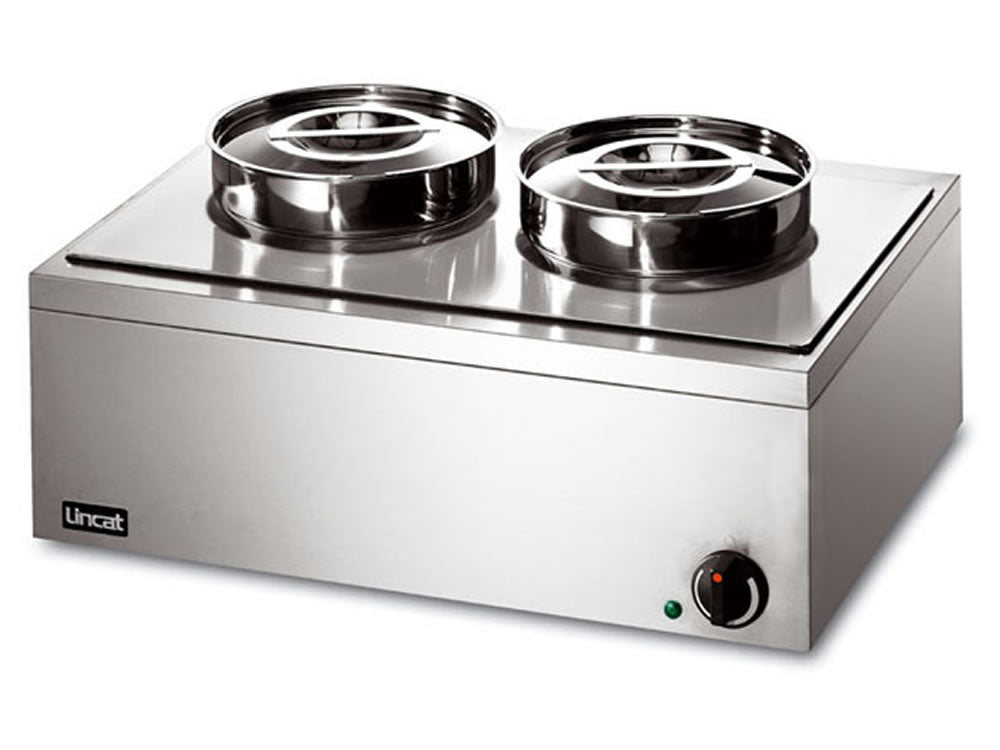
The Lincat LRB2W is a wet heat bain marie supplied with two stainless steel round pots. It operates by introducing moisture into the holding environment, which keeps food from drying...
Specifications
- External depth (mm)
- 400
- External height (mm)
- 245
- External width (mm)
- 565
- Power rating (kw)
- 0.5
Product Description
The Lincat LRB2W is a wet heat bain marie supplied with two stainless steel round pots. It operates by introducing moisture into the holding environment, which keeps food from drying out during service — a meaningful distinction from dry well alternatives. It is designed for holding prepared foods at consistent serving temperatures from the start of service through to the last order.
In a working kitchen, the wet well method is the preferred choice for sauces, gravies, soups, and softer vegetables. The moist environment is gentler on food texture than dry heat and helps distribute temperature more evenly across the pot contents. During a busy lunch or dinner service, when dishes may sit for a period before plating, that consistency matters. The adjustable heat control allows the operator to dial in an appropriate temperature for different food types without constant attention.
There are a few practical points worth considering before purchase. Wet heat units require a small amount of water in the well, which needs to be topped up during service and cleaned out regularly to prevent limescale accumulation — particularly in hard water areas. Descaling should be built into the cleaning routine as standard. The unit draws power steadily during a service period, which is worth factoring into running costs on longer shifts.
- Well suited to holding sauces, gravies, soups and soft vegetables
- Moist heat reduces drying and maintains food quality throughout service
- Adjustable temperature control for different food types
- Straightforward to clean and maintain as part of a daily routine
This unit is best suited to smaller operations — cafés, pub kitchens, hotel buffet stations, and catering establishments running moderate service volumes. For sites needing to hold a broader range of dishes simultaneously or running higher throughput, a larger or multi-section unit would be worth considering.
If you are weighing up wet versus dry heat for your menu and service style, our team is happy to talk it through before you commit.
Key Features
- Wet well heating method introduces moisture to the holding environment
- Supplied with two stainless steel round pots as standard
- Adjustable heat control to suit different food types and temperatures
- Electric operation with steady heat output across the service period
- Compact countertop footprint suited to smaller service stations
Operational Benefits
- Maintains consistent serving temperatures from first order to last
- Moist environment preserves texture in sauces, soups and gravies
- Reduces the need for constant temperature monitoring during service
- Straightforward daily cleaning keeps the unit in reliable working order
- Compact size fits neatly into tighter servery or pass configurations
Specifications
- External depth (mm)
- 400
- External height (mm)
- 245
- External width (mm)
- 565
- Power rating (kw)
- 0.5
- Power type
- Electric 1 Phase
- Weight (kg)
- 12
Frequently Asked Questions
- Wet heat is generally the better choice for sauces, gravies, soups, and soft vegetables, where retaining moisture and texture during the hold period is important. Dry well units tend to suit denser or drier foods and are simpler to maintain where limescale is a concern. If you are holding a mix of food types, it is worth discussing which method suits the majority of your menu before deciding.
- The main routine is keeping the well topped up with water during service and draining and cleaning it thoroughly at the end of each shift. In hard water areas, regular descaling is important to prevent limescale build-up affecting performance and extending element life. Factoring descaling into your weekly cleaning schedule is good practice.
- The LRB2W is well suited to smaller operations such as cafés, pub kitchens, and hotel buffet stations running moderate service volumes. For kitchens holding a wide range of foods simultaneously or running continuous high-volume service, a larger or multi-section unit is likely to be a better fit and worth exploring with the team.