
Valera AT50A Counter Top Induction Hob Single Zone
Product Description
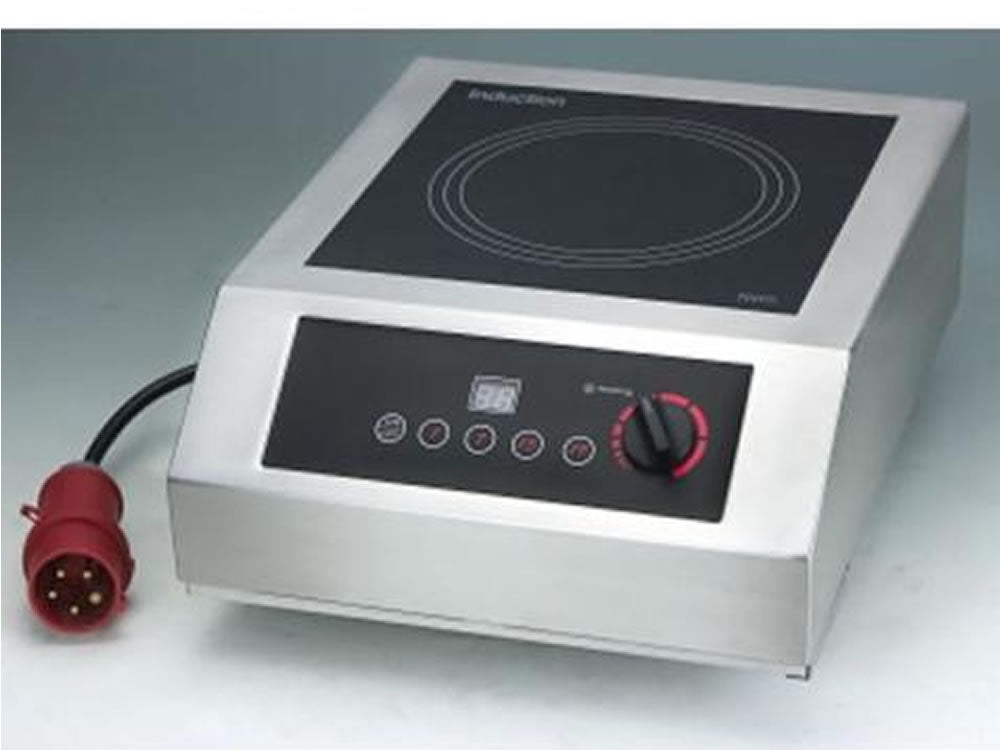
The Valera AT50A is a single-zone counter top induction hob built for commercial use. Rather than heating a surface, it generates heat directly within the base of compatible cookware, which...
Specifications
- External depth (mm)
- 520
- External height (mm)
- 197
- External width (mm)
- 385
- Power rating (kw)
- 5
Product Description
The Valera AT50A is a single-zone counter top induction hob built for commercial use. Rather than heating a surface, it generates heat directly within the base of compatible cookware, which means energy is used efficiently and the hob surface itself stays relatively cool during operation. It works with any pot or pan that has a ferrous base — stainless steel and cast iron being the most common in commercial kitchens — so it is worth checking your existing batterie de cuisine before purchasing.
In a working kitchen, the practical value of induction lies in its response time. Heat adjusts near-instantly, which is a genuine operational advantage during service when you need to shift quickly between a rolling boil and a controlled simmer. The rotary controls are straightforward to use under pressure and require no particular training. Because there is no retained surface heat and no combustion residue, cleaning down at the end of service is considerably quicker than with gas or solid-top electric alternatives.
- Near-instant heat response supports precise control throughout service
- Cool cooking surface reduces burn risk and speeds up end-of-service clean-down
- Compact counter top footprint works well in tight layouts or supplementary stations
- No open flame means no combustion-specific ventilation requirement for the hob itself
- Compatible with standard ferrous cookware found in most commercial kitchens
As a single-zone unit, the AT50A is well suited to smaller operations, front-of-house live cooking positions, supplementary prep stations, or as additional cooking capacity during peak periods. It runs on a three-phase power supply, so it is important to confirm your electrical infrastructure can accommodate this before proceeding — something to raise with your electrician at the planning stage. For higher-volume sites requiring continuous multi-zone output, a heavier-duty or multi-zone unit is likely to be a better fit.
If you would like to talk through whether this unit suits your kitchen layout and service requirements, our team is happy to help before you make a decision.
Key Features
- Single-zone induction hob designed for counter top commercial use
- Direct-to-cookware heat generation with near-instant temperature response
- Rotary control interface operable without specialist training
- Compatible with all ferrous-base cookware including cast iron and stainless steel
- Three-phase power supply for reliable output during continuous service
Operational Benefits
- Precise heat control helps operators manage multiple dishes during busy service
- Cool hob surface reduces burn risk and supports safer kitchen working conditions
- Fast clean-down after service reduces time spent on end-of-day kitchen tasks
- Compact footprint allows flexible placement in tight or supplementary cooking positions
- No combustion output simplifies ventilation planning compared with gas alternatives
Specifications
- External depth (mm)
- 520
- External height (mm)
- 197
- External width (mm)
- 385
- Power rating (kw)
- 5
- Power type
- Electric 3 Phase
- Weight (kg)
- 15
Frequently Asked Questions
- The AT50A is designed for commercial use and will handle continuous operation through a standard service period. As a single-zone unit, it is best suited to smaller operations or supplementary cooking positions rather than high-volume kitchens requiring multiple zones running simultaneously. If your service demands constant heavy output across several cooking positions, a multi-zone or higher-capacity unit would be worth considering.
- The AT50A runs on a three-phase power supply, which is not always present in every commercial kitchen as standard. Before purchasing, it is important to confirm with your electrician that your site can accommodate this requirement, as retrofitting a three-phase supply can add time and cost to the installation.
- Because induction hobs produce no open flame and no combustion byproducts, they do not carry the same ventilation requirements as gas equipment in that respect. However, general kitchen extraction should still be in place to manage steam and cooking vapours from the food itself — particularly if the unit is positioned on the pass or in a front-of-house setting where airflow may be more restricted.