
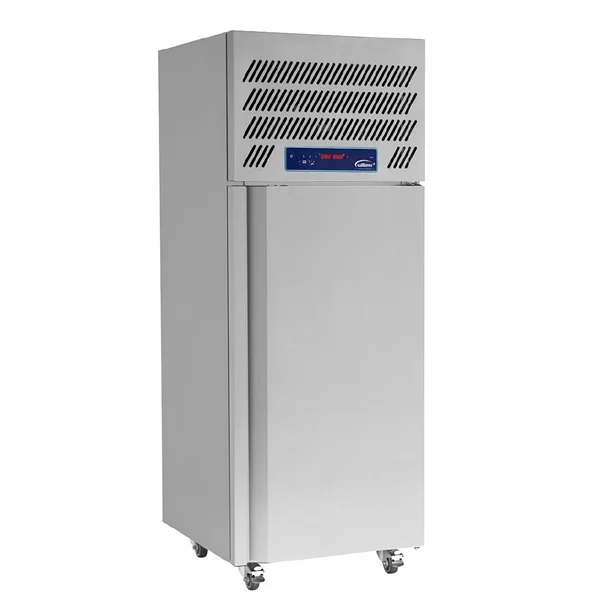
Williams WBCF50-SS 50kg 13 Grid Reach-In Blast Chiller Freezer
Product Description
The Williams WBCF50-SS is a reach-in blast chiller and freezer designed to handle both blast chilling and blast freezing within a single cabinet. With a 50kg load capacity across a...
Specifications
- Capacity (grids)
- 13
- Capacity (kg)
- 50
- External depth (mm)
- 805
- External height (mm)
- 1880
- Capacity
- 50kg
- Refrigerant
- R290
Product Description
The Williams WBCF50-SS is a reach-in blast chiller and freezer designed to handle both blast chilling and blast freezing within a single cabinet. With a 50kg load capacity across a 13-grid configuration, it is built around the structured cook-chill and cook-freeze workflows that characterise serious production kitchens — where cold chain consistency across repeated daily cycles is a practical requirement, not an optional extra.
In high-volume kitchens, recovery between loads matters as much as headline capacity. Williams' AirSmart airflow system distributes cold air uniformly across the load rather than concentrating cooling at a single point, which helps protect food quality and texture through the chilling process — particularly relevant when handling delicate preparations alongside denser protein dishes. The cabinet is rated for use in elevated ambient temperatures, which is a meaningful advantage in kitchens where the surrounding environment runs warm and lesser units begin to struggle. R290 hydrocarbon refrigerant keeps the unit in line with current environmental standards while supporting efficient operation over time.
Day-to-day, the design offers some practical operational advantages worth noting:
- Soft and hard chill modes let operators match the cycle to the food type without manual guesswork
- Simple 1-2-3 control panel reduces the training burden on kitchen staff across shift changes
- Full stainless steel construction supports the hygiene and cleaning standards required in professional kitchens
- Self-closing door limits temperature fluctuation between loading cycles
- R290 refrigerant meets current environmental compliance requirements and supports lower running costs
Installation requires adequate clearance on all sides to allow heat from the refrigeration cycle to dissipate — restricted ventilation will affect both performance and long-term reliability. As a reach-in unit, sufficient floor space is needed for full door swing and practical loading access. Electrical supply requirements should be confirmed before installation is planned. If this cabinet is being integrated into an existing cook-chill line, it is worth reviewing the wider workflow — regen capacity, storage scheduling, and batch volumes — at the same time rather than treating the chiller as a standalone addition.
The WBCF50-SS is well suited to mid-to-large catering operations where cook-chill or cook-freeze production runs regularly through the week: contract caterers, hotel and events kitchens, hospital catering units, and larger restaurant or pub group operations are all typical users. For smaller sites with lower daily throughput, a reduced-capacity model is likely to be a more proportionate fit. For central production units operating at significant scale, or operations with consistently high batch volumes, it is worth considering whether a heavier-duty or multi-cabinet configuration would better match demand.
If you are working out how this cabinet fits into your production process, or want to sense-check whether the 50kg capacity is the right match for your operation, the team is happy to talk it through before you commit.
Key Features
- 50kg capacity across a 13-grid reach-in blast chiller freezer configuration
- AirSmart system delivers uniform airflow distribution across the full load
- Soft and hard chill modes selectable to suit different food types and densities
- Rated for operation in elevated ambient kitchen temperatures
- R290 hydrocarbon refrigerant for environmental compliance and efficient running
Operational Benefits
- Consistent cold chain performance supports reliable cook-chill production cycles
- Even airflow across the load helps preserve food quality and texture
- Dual chill and freeze capability removes the need for two separate cabinets
- Simple control panel reduces staff training time and operational errors
- Self-closing door minimises temperature fluctuation during repeated loading
Specifications
- Capacity (grids)
- 13
- Capacity (kg)
- 50
- External depth (mm)
- 805
- External height (mm)
- 1880
- External width (mm)
- 707
- Extra information
- The WBCF50 requires connection to a main drain using a 19mm ID flexible pipe.
- Insulation
- 75mm
- Internal depth (mm)
- 350
- Internal finish
- Stainless Steel
- Internal height (mm)
- 1195
- Internal width (mm)
- 587
- Material
- Stainless Steel
- Max ambient temp deg c
- 43
- Power type
- 3 Phase Hardwired
- Refrigerant
- R290
- Temperature range (deg c)
- -18 to +90
- Capacity
- 50kg
- Refrigerant
- R290
Frequently Asked Questions
- The 50kg load capacity is typically well matched to mid-to-large catering operations running structured cook-chill production — contract caterers, hotel kitchens, and hospital catering units being common examples. If your daily batch volumes are consistently at the upper end or you are running multiple cycles back-to-back under pressure, it is worth discussing whether a higher-capacity or multi-cabinet setup would give you more operational headroom.
- The WBCF50-SS needs adequate clearance on all sides to allow heat from the refrigeration cycle to dissipate freely — restricted airflow around the cabinet will reduce performance and can shorten the unit's service life. You will also need to confirm your electrical supply against the unit's requirements before planning installation, and ensure sufficient floor space for full door swing and practical loading access.
- Yes — the WBCF50-SS is designed as a combined blast chiller and freezer, so it can handle both functions within a single cabinet. This makes it practical for operations that need to chill batches to safe refrigeration temperatures on some cycles and blast freeze for longer-term storage on others, without requiring two separate units to manage the two processes.