
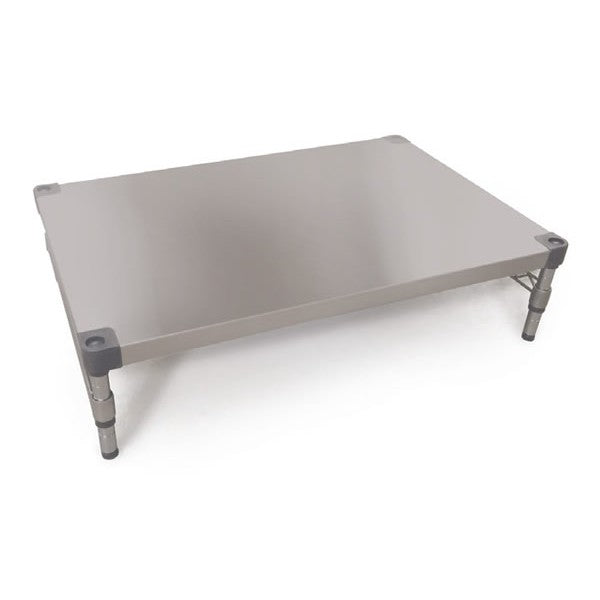
EAIS Galvanised Solid Dunnage Rack | Floor Storage Platform
Product Description
Dunnage racks are low-profile floor-standing storage platforms designed to raise dry goods, bulk ingredients, and packaged product off the kitchen floor. EAIS manufacture these in galvanised steel with a solid...
Specifications
Downloads
Product Description
Dunnage racks are low-profile floor-standing storage platforms designed to raise dry goods, bulk ingredients, and packaged product off the kitchen floor. EAIS manufacture these in galvanised steel with a solid deck surface, making them a reliable choice for dry stores, walk-in areas, and back-of-house storage where raised floor-level storage is a hygiene and compliance requirement.
In working kitchens, dunnage racks earn their place by keeping stock clear of cold, damp floors and allowing air to circulate beneath stored goods. The solid deck surface means nothing falls through, which suits bagged or loose product that would shift or spill on an open wire shelf. The three-sided stability frame prevents the rack from racking or distorting under load — particularly relevant when heavy sacks are being placed and removed at pace during a busy goods-in period.
Practical advantages operators typically value:
- Raised platform keeps stock clear of floor-level moisture and cold surfaces
- Solid galvanised deck suits bagged dry goods, boxes, and bulk containers
- Low-profile height fits beneath shelving runs or stands alone in a dry store
- Galvanised finish resists corrosion in humid storage environments
- Three-sided frame maintains structural integrity under repeated heavy loading
These racks require no installation beyond placing on a level floor surface — there are no electrical, gas, or water connections involved. It is worth noting that solid deck dunnage racks are suited to dry storage specifically; they are not the right choice for refrigerated or wet areas, where open-wire designs are generally preferred to allow drainage. If you are placing multiple units, allow adequate aisle clearance for safe manual handling during goods-in.
Well suited to any catering operation with a dedicated dry store — hotels, contract caterers, school kitchens, care homes, and sites handling regular bulk deliveries. For operations needing mid-height or full-height shelving rather than floor-level raised storage, open wire or solid shelving systems would be more appropriate.
If you are specifying dry store storage for a new or refurbished kitchen, the team is happy to talk through what combination of shelving and dunnage racking makes sense for your space.
Key Features
- Solid galvanised steel deck keeps bagged goods stable and secure
- Three-sided stability frame resists racking under repeated heavy loads
- Low-profile design fits neatly beneath existing shelving runs
- Galvanised steel construction resists corrosion in humid environments
- No-install floor placement suitable for dry store and back-of-house use
Operational Benefits
- Raises stock off damp floors to support hygiene and compliance requirements
- Solid deck prevents loose or bagged goods from shifting during busy goods-in
- Allows air to circulate beneath stored product, helping preserve dry goods condition
- Durable finish supports long service life in demanding back-of-house environments
- Simple placement with no installation time or trades required
Specifications
Downloads
Frequently Asked Questions
- Solid deck dunnage racks are designed for dry store use. In refrigerated or wet environments, open-wire dunnage racks are generally the better choice as they allow drainage and do not trap moisture beneath stored goods.
- Dunnage racks have a wide footprint relative to their height, so it is important to plan aisle clearance carefully when placing multiple units together. Allow enough space for operatives to manoeuvre safely during goods-in, particularly if heavy sacks or bulk containers are being moved by hand.
- Dunnage racks are floor-level platforms rather than full-height storage solutions, so most dry stores use them alongside wall-mounted or freestanding shelving runs. They are particularly well suited to holding bulk sacks, large containers, or items too heavy to lift onto shelves safely — freeing upper shelving for smaller or more frequently accessed stock.