
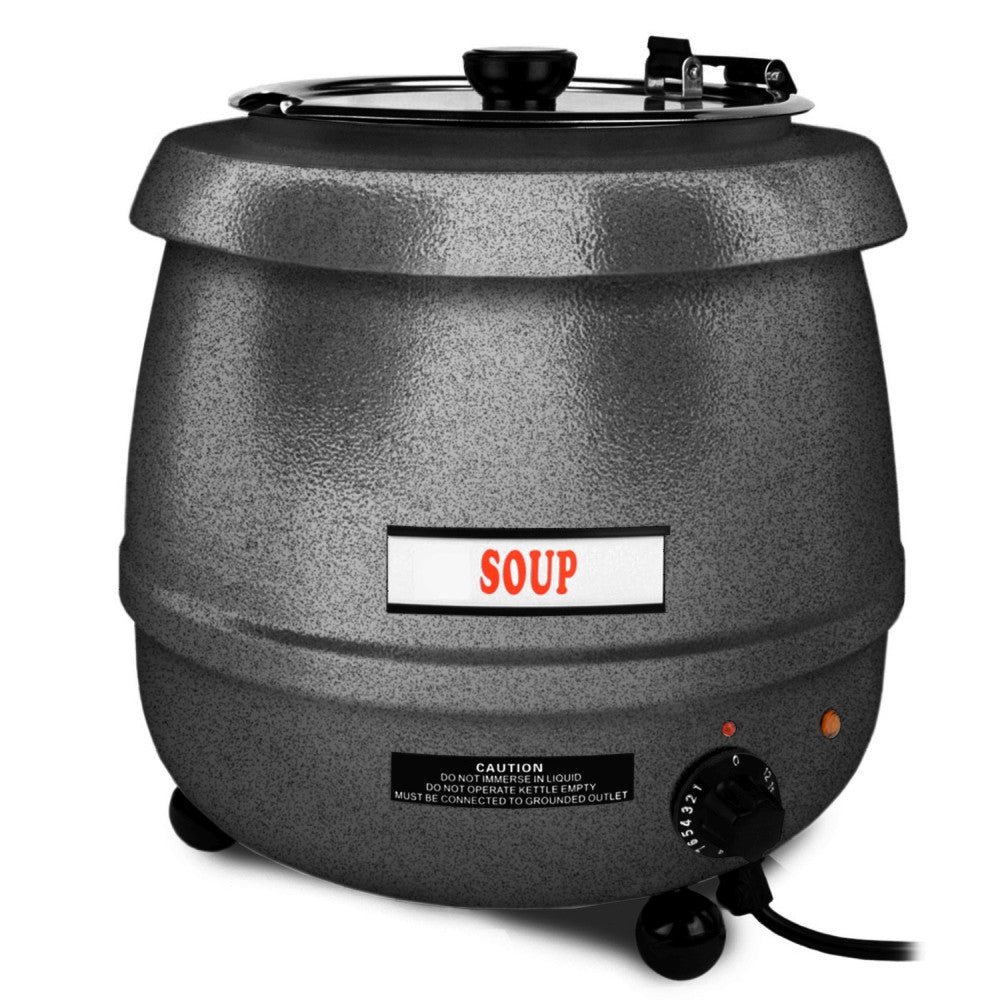
Thunder Group SEJ31000C 10.5 Qt Stainless Steel Soup Warmer
Product Description
The Thunder Group SEJ31000C is a countertop soup warmer designed for self-service and assisted-service environments. It holds a generous volume of soup or other hot liquids at a consistent serving...
Specifications
- Capacity (litres)
- 9.93
- Material
- Stainless Steel
- Power type
- 13amp Plug
Downloads
Product Description
The Thunder Group SEJ31000C is a countertop soup warmer designed for self-service and assisted-service environments. It holds a generous volume of soup or other hot liquids at a consistent serving temperature, making it a practical addition to buffet lines, cafeteria counters, catering events, and banqueting setups where soup needs to be available and ready throughout a service period.
In a buffet or catering context, reliable heat retention is more important than rapid heating. This warmer is built around that principle — once brought up to temperature, it maintains a steady hold without requiring constant attention from service staff. The adjustable temperature control allows operators to dial in the right setting depending on the liquid being served, whether that is a light broth or a heavier cream-based soup.
From a practical standpoint, a few features make day-to-day use straightforward:
- Non-stick coated inner pot simplifies cleaning at the end of service
- Stainless steel construction is durable and suitable for regular commercial use
- Adjustable temperature control supports a range of hot-hold requirements
- Mirror-finish exterior presents well in front-of-house settings
This is a straightforward piece of equipment with no complex installation requirements — it operates from a standard electrical supply and simply sits on a counter. It is not designed to heat soup from cold, so food should be brought up to temperature in a separate piece of equipment before being transferred to the warmer for service.
This warmer suits cafés, hotel breakfast operations, buffet restaurants, and contract catering teams that need a reliable, easy-to-manage soup station for service. For very high-volume sites running extended service windows or multiple soups simultaneously, it is worth considering whether a larger-capacity or purpose-built bain-marie station would serve the operation better.
If you are unsure whether this suits your service style or volume, the team is happy to talk it through with you.
Key Features
- Non-stick coated inner pot for straightforward post-service cleaning
- Adjustable temperature control to suit a range of hot-hold applications
- Mirror-finish stainless steel exterior suited to front-of-house display
- Countertop design requiring only a standard electrical connection
- Generous capacity supports extended service periods without frequent refilling
Operational Benefits
- Maintains stable soup temperature throughout a full service period
- Reduces staff intervention during busy self-service or buffet runs
- Presentable finish supports professional front-of-house food display
- Simple cleaning process keeps post-service turnaround quick and efficient
- Compact countertop footprint fits into tight servery or buffet layouts
Specifications
- Capacity (litres)
- 9.93
- Material
- Stainless Steel
- Power type
- 13amp Plug
Downloads
Frequently Asked Questions
- Yes, provided the soup is brought up to the correct serving temperature before being transferred into the warmer. This unit is designed for hot-holding rather than heating from cold, so it works best as part of a workflow where a separate pot or boiler is used to prepare the soup beforehand.
- It operates from a standard electrical supply and requires no specialist installation — it simply plugs in and sits on a counter. As with any countertop electrical appliance in a commercial setting, you should confirm it is used in accordance with your kitchen's safe operating procedures.
- For smaller buffet setups, cafés, or events where soup is one of several food options, this capacity is generally well suited. For larger operations running multiple soup options simultaneously, or where throughput is very high, it may be worth speaking to us about whether a higher-capacity unit or a different serving solution would be more practical.