
Rational iCombi Classic 10-2/1 Gas Combination Oven
Product Description
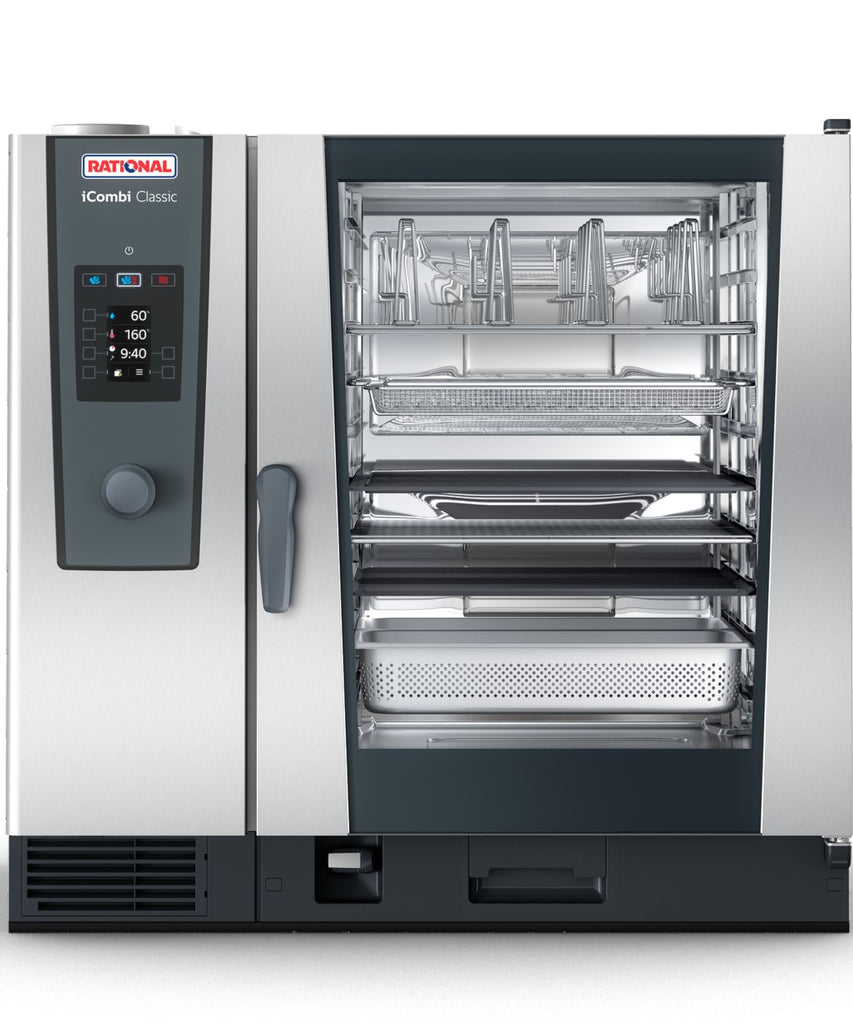
The Rational iCombi Classic 10-2/1 is a full-size gas combination oven built for sustained, high-volume production. It operates across three cooking modes — steam, convection, and combination — and is...
Specifications
- External depth (mm)
- 1042
- External height (mm)
- 1064
- External width (mm)
- 1072
- Power rating (kw)
- 42
- Capacity
- 10 Grid
Downloads
Rational iCombi Classic 10 2 SpecsProduct Description
The Rational iCombi Classic 10-2/1 is a full-size gas combination oven built for sustained, high-volume production. It operates across three cooking modes — steam, convection, and combination — and is available in both natural gas and LPG configurations, which makes it a practical option for sites where mains gas is unavailable or where LPG is the established fuel source.
In a demanding kitchen environment, the iCombi Classic performs consistently under the kind of load that exposes weaker equipment. The combination mode manages heat and moisture simultaneously, shortening cooking times and supporting uniformity across a full rack of product. Rational's ClimaPlus humidity system allows cabinet moisture to be adjusted in fine increments, which gives chefs meaningful control when different dishes are running concurrently. Multiple fan wheels distribute heat evenly throughout the cavity — a detail that matters most when running at full capacity during a heavy service.
From a practical standpoint, the iCombi Classic addresses several day-to-day operational concerns:
- Up to 100 saved multi-step programmes support consistency across different staff and shifts
- Precise humidity control reduces guesswork and helps maintain output quality at volume
- LED chamber lighting allows visual checks without opening the door and losing cabinet conditions
- Automatic cleaning cycles, including an overnight option, reduce manual workload between services
- An integrated care system manages scale build-up — particularly relevant in hard-water areas
Installation requires careful planning. The unit needs a gas supply matched to the configured fuel type, a dedicated water supply and drain for steam generation and automatic cleaning, and adequate ventilation via a suitable extraction canopy or compatible ventilation hood. The oven is large and heavy, so access routes, floor loading, and service clearances should all be assessed before delivery is arranged. Installation must be carried out by a qualified gas engineer, and commissioning by a Rational-approved engineer is strongly advisable to ensure the unit is correctly configured from the outset.
The 10-2/1 configuration is best suited to high-volume operations: large restaurant kitchens, hotel banqueting, contract catering, staff dining facilities, and central production units where throughput demands are consistent and significant. Smaller kitchens, or operations with lighter and more variable output, are likely to be better served by a smaller rack configuration that is more economical to run day-to-day. Conversely, sites with very high or growing production demands should consider whether a single unit is sufficient or whether a two-unit installation would better match peak capacity requirements.
A combi oven at this level is a long-term capital commitment, and getting the specification right from the start matters. If you would like to talk through whether the 10-2/1 suits your kitchen's output, infrastructure, and service pattern, the team is happy to work through it with you before you commit.
Key Features
- Three cooking modes: steam, convection, and combination in one cabinet
- ClimaPlus system adjusts cabinet humidity in precise increments during cooking
- Available in natural gas and LPG configurations for flexible site installation
- Supports up to 100 saved multi-step cooking programmes for consistent output
- Automatic cleaning cycles including an overnight option to reduce manual effort
Operational Benefits
- Maintains consistent results across a full rack during demanding service periods
- Reduces cooking times by managing heat and humidity simultaneously in combination mode
- Helps kitchen teams reproduce dishes accurately regardless of who is operating the oven
- Overnight cleaning cycle minimises prep time and manual workload between services
- LPG compatibility allows installation at sites without access to mains natural gas
Specifications
- External depth (mm)
- 1042
- External height (mm)
- 1064
- External width (mm)
- 1072
- Power rating (kw)
- 42
- Power type
- Natural Gas|LPG
- Temperature range (deg c)
- 30 - 300
- Weight (kg)
- 187
- Capacity
- 10 Grid
Downloads
Rational iCombi Classic 10 2 SpecsFrequently Asked Questions
- The 10-2/1 is a high-capacity unit that makes most sense where throughput demands are consistently heavy — large restaurant kitchens, banqueting operations, contract catering facilities, and central production units are typical applications. If your service volumes are lower or more variable, a smaller rack configuration will generally be more economical to run and better matched to your actual output. It is worth discussing your peak covers, menu range, and service pattern with the team before deciding.
- You will need a gas supply matched to the unit's fuel type (natural gas or LPG), a dedicated cold water supply and drain connection for steam generation and automatic cleaning, and adequate extraction — either a suitable canopy or a compatible ventilation system. The unit is heavy and large, so access routes, floor loading, and service clearances all need to be assessed before delivery. Installation must be carried out by a qualified gas engineer, and Rational-approved commissioning is strongly advisable.
- The integrated care system handles much of the day-to-day scale management automatically, which is particularly useful in hard-water areas, and the automatic cleaning programmes reduce the manual effort required between services. That said, like all gas combination ovens at this level, the iCombi Classic benefits from regular planned preventative maintenance by a qualified engineer familiar with the platform — this protects both performance and the unit's operational lifespan.