
Lincat LRB Dry Heat Bain Marie with Round Pot
Product Description
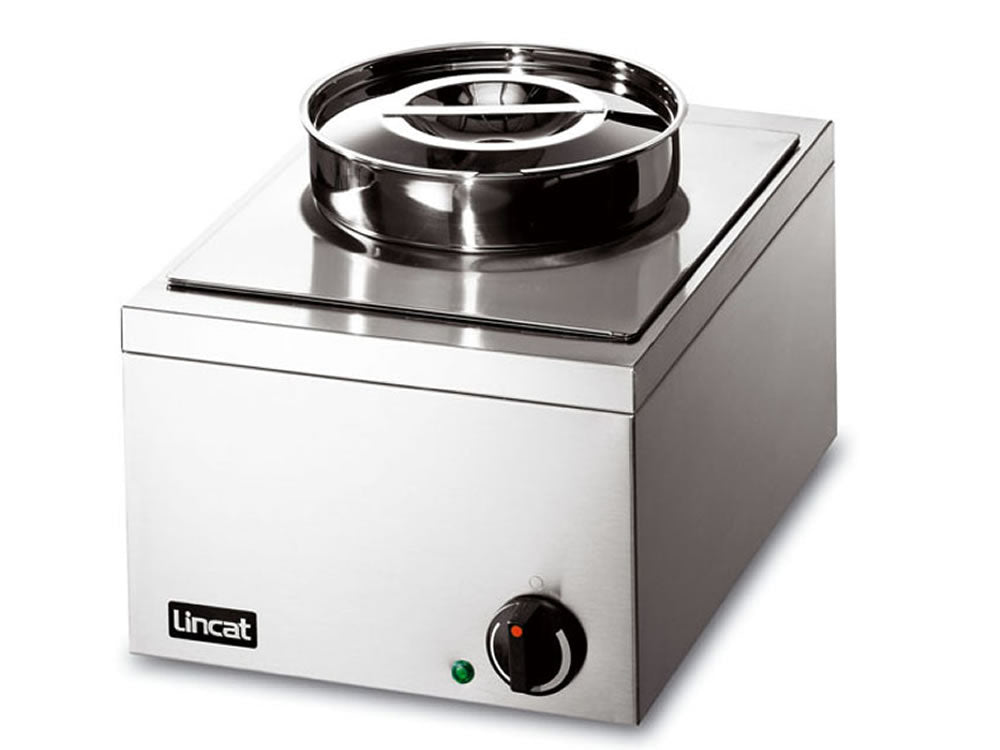
The Lincat LRB is a dry well bain marie supplied with a stainless steel round pot. Rather than suspending containers in heated water as a wet well unit does, it...
Specifications
- External depth mm
- 400
- External height mm
- 245
- External width mm
- 285
- Power rating kw
- 0.25
Product Description
The Lincat LRB is a dry well bain marie supplied with a stainless steel round pot. Rather than suspending containers in heated water as a wet well unit does, it uses radiant heat from a heated chamber to maintain food at serving temperature. It is a straightforward, practical piece of equipment commonly used for holding soups, sauces, gravies and stews through a service period.
The absence of water is the defining characteristic in day-to-day use. There is nothing to fill at the start of service, nothing to monitor during it, and no hot water to drain or manage at the end. This makes the unit quicker to prepare, easier to reposition when needed, and simpler to clean down after service. Adjustable heat control allows operators to set an appropriate holding temperature for whatever is being served.
- No water to fill, monitor or dispose of — simpler daily operation
- Lower spillage risk when moving the unit during or after service
- Well suited to soups, stews, gravies and other moist dishes
- Quick to clean down at the end of a service period
- Compact footprint suited to front-of-house or supplementary holding points
It is worth being clear about where dry well units work best. They suit foods with sufficient moisture content that can tolerate gentle radiant heat over a service period. Dishes that dry out quickly under prolonged heat may perform better in a wet well environment. As a single-pot unit, operations holding several dishes simultaneously may find a multi-pot configuration more practical.
This unit is well suited to smaller operations, carvery and buffet service, and situations where a supplementary holding point is needed alongside existing equipment. If you are weighing up dry versus wet well, or want to talk through whether a single pot will cover your service requirements, we are happy to help.
Key Features
- Dry well radiant heat chamber requires no water to operate
- Supplied with stainless steel round pot for immediate use
- Adjustable heat control for dialling in holding temperatures
- Compact single-pot footprint suitable for counter or buffet use
- Electric operation with straightforward plug-in installation
Operational Benefits
- Eliminates water management, reducing setup and close-down time
- Maintains consistent holding temperatures throughout a service period
- Lower spillage risk makes repositioning during service practical
- Compact design fits supplementary holding positions without disrupting workflow
- Simple construction keeps cleaning straightforward at end of service
Specifications
- External depth mm
- 400
- External height mm
- 245
- External width mm
- 285
- Power rating kw
- 0.25
- Weight kg
- 7.0
Frequently Asked Questions
- Dry well units work well for foods with good moisture content such as soups, gravies, stews and sauces, where radiant heat maintains temperature without drying the dish out. Foods with low moisture content or those that deteriorate quickly under sustained heat tend to fare better in a wet well environment, where water provides a gentler, more even heat distribution. If you are unsure which suits your menu, it is worth discussing before you order.
- The LRB is an electric unit designed for straightforward counter-top use and does not require a plumbed water supply, making it easy to position and reposition as needed. As with any electric catering appliance, it should be connected in line with current electrical regulations — if you are unsure about your site's requirements, your installer will be able to advise.
- For operations holding one dish at a time — a soup of the day, a single sauce or gravy — a single-pot unit is generally sufficient. If your service regularly involves holding two or more dishes simultaneously, a multi-pot configuration is likely to be more practical. We can help you work out the right capacity for your service volume if you want to talk it through.