
Parry NPEO Electric Fan Assisted Convection Oven
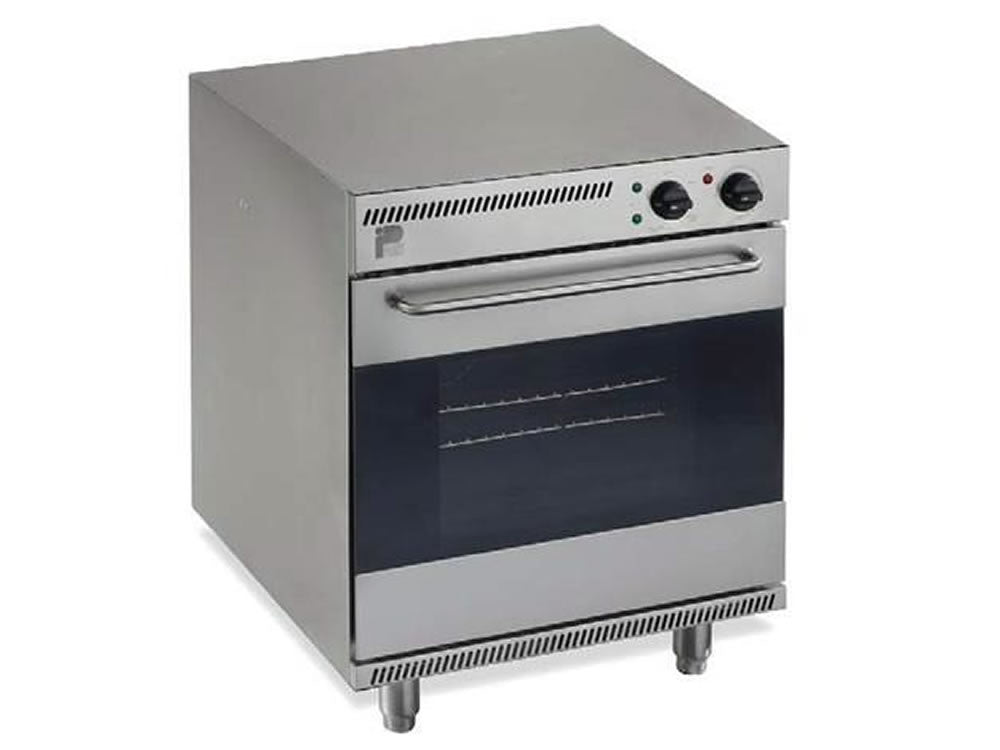
Product Description
The Parry NPEO is a single-cavity electric convection oven built for commercial kitchen use. A top-mounted fan circulates heat continuously around the cavity, reducing the hot spots that are common...
Specifications
- External depth (mm)
- 600
- External height (mm)
- 700
- External width (mm)
- 605
- Power rating (kw)
- 2.8
- Capacity
- 5 x 2/3 GN
Product Description
The Parry NPEO is a single-cavity electric convection oven built for commercial kitchen use. A top-mounted fan circulates heat continuously around the cavity, reducing the hot spots that are common in static ovens and producing more consistent results across multiple trays during a single cook cycle. Temperature is set manually, and the large glazed door incorporates a damper to help manage steam release without requiring the operator to intervene. Two wire racks are supplied as standard.
In a working kitchen, fan-assisted ovens of this type are a reliable choice for roasting, baking, and general oven cookery. The circulated heat promotes even browning and more predictable results across batches, which matters during service when consistency cannot be left to chance. The manual controls are straightforward to operate and accessible to different members of a kitchen team without close supervision, which reduces the risk of errors during busy periods.
From a day-to-day standpoint, the NPEO offers several practical operational advantages:
- Even heat circulation reduces the need to rotate trays mid-cook
- Manual controls are simple to use and less prone to failure than digital systems
- The dampened door assists steam control without requiring manual venting
- Electric operation removes the need for a gas supply at the oven position
- Supplied with two wire racks, ready to use from installation
As an electric unit, the NPEO requires a suitable electrical supply and adequate ventilation around the cabinet. It is a single-cavity oven rather than a high-volume rack or pass-through unit, so operators with demanding batch output should consider whether a larger-capacity model would better match their throughput before committing.
This oven is well suited to cafés, small restaurants, pub kitchens, and similar operations running moderate, steady service volumes. It works reliably as a standalone unit or as a secondary oven alongside a range. Sites with significantly higher output demands may find it worth discussing a heavier-duty alternative before purchasing.
If you would like to talk through whether this oven is the right fit for your kitchen setup and service volume, the team is happy to help you work it out.
Key Features
- Top-mounted fan circulates heat evenly across all tray positions
- Manual temperature controls with simple, reliable operation
- Dampened glazed door manages steam release during cooking cycles
- Single-cavity electric design requires no gas supply at the unit
- Supplied with two wire racks ready for immediate use
Operational Benefits
- Consistent batch results reduce waste and rework during service
- Simple controls keep the oven accessible to the whole kitchen team
- Reduced need to rotate trays frees up operator time during busy periods
- Electric operation gives flexibility in kitchen positioning and layout
- Reliable performance supports steady output in moderate-volume operations
Specifications
- External depth (mm)
- 600
- External height (mm)
- 700
- External width (mm)
- 605
- Power rating (kw)
- 2.8
- Temperature range (deg c)
- 50 - 250
- Weight (kg)
- 40
- Capacity
- 5 x 2/3 GN
Frequently Asked Questions
- The NPEO is well suited to moderate, steady service volumes — cafés, pub kitchens, small restaurants, and similar operations. If your kitchen runs demanding batch output or requires continuous high-throughput cooking across multiple covers, it would be worth speaking to us about whether a larger-capacity or higher-duty oven would be a better match.
- The NPEO is an electric oven, so a suitable electrical supply is required at the installation point — no gas connection is needed. You should also allow adequate ventilation clearance around the cabinet. If you are unsure about your existing electrical provision or kitchen layout, it is worth confirming the requirements with your installer before purchasing.
- In a static oven, heat rises from a single element and can create uneven temperature zones across the cavity, often requiring trays to be rotated during cooking. A fan-assisted oven circulates the heat continuously, which promotes more even browning and consistent results across all tray positions — particularly useful when cooking multiple trays simultaneously during service.