
EWC Automatic Cold Water Softener
Product Description
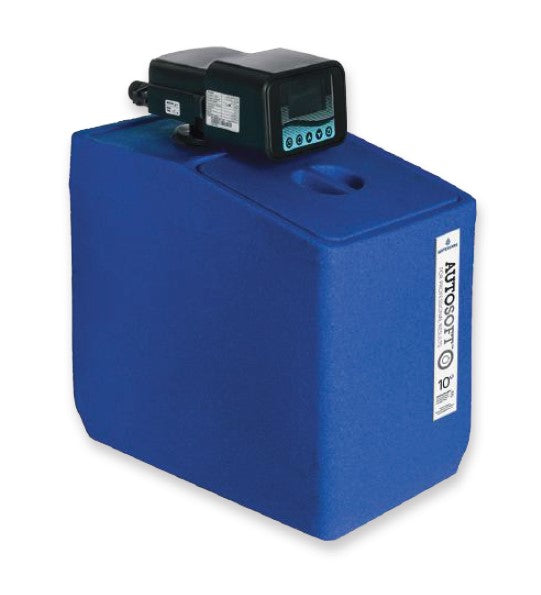
The EWC Automatic Cold Water Softener is a timer-controlled inline unit that treats incoming cold water before it reaches connected equipment. It works by removing the dissolved minerals responsible for...
Specifications
Downloads
Product Description
The EWC Automatic Cold Water Softener is a timer-controlled inline unit that treats incoming cold water before it reaches connected equipment. It works by removing the dissolved minerals responsible for limescale, protecting the internal components of glasswashers, dishwashers, boilers, and associated pipework from the gradual build-up that causes performance to decline and equipment to fail early.
In hard water areas, limescale is one of the leading causes of avoidable equipment damage in commercial kitchens. Heating elements scale over and lose efficiency, wash arms become progressively restricted, and service intervals shorten. Addressing the water quality at source — before it enters your machines — is consistently more effective than descaling after the fact. For operations running warewashing equipment daily, the difference in running costs and service frequency can be meaningful over time.
Running softened water through your warewashing equipment brings several practical advantages:
- Reduces scale accumulation on heating elements, extending their working life
- Supports more consistent cleaning and drying results from dishwashers and glasswashers
- Lowers the frequency and cost of descaling treatments and service callouts
- Helps protect manufacturer warranties, which are commonly voided by limescale damage
- Can reduce consumption of rinse aid and detergent over time
The unit regenerates automatically on a timer cycle. It requires a supply of block salt and routine checks to keep it operating correctly. Installation is a straightforward job for a qualified plumber — an inline connection on the cold water feed ahead of the equipment being protected. When planning the installation, allow adequate space around the unit and clear access for topping up salt.
This softener is well suited to cafés, pubs, restaurants, and similar small to medium-sized operations running a single glasswasher or dishwasher in a hard water area. Sites with multiple machines or significantly higher daily throughput should consider a higher-capacity unit to avoid frequent regeneration cycles that could interrupt supply.
If you are unsure whether your water hardness warrants a softener, or whether this capacity is the right match for your setup, our team is glad to talk it through with you.
Key Features
- Timer-controlled automatic regeneration cycle for consistent water treatment
- Inline cold water installation ahead of connected catering equipment
- Ion-exchange process removes hardness minerals before they reach machinery
- Block salt regeneration system with straightforward replenishment access
- Sized for single-machine installations in small to medium operations
Operational Benefits
- Protects heating elements from scale, reducing early failure and replacement costs
- Lowers service callout frequency by addressing limescale before it accumulates
- Supports manufacturer warranty compliance by supplying softened water to equipment
- Improves wash results and drying performance from glasswashers and dishwashers
- Reduces ongoing spend on rinse aid, detergent, and descaling treatments
Specifications
Downloads
Frequently Asked Questions
- Water hardness varies significantly across the UK, with many areas in the South East, Midlands, and East of England classified as hard or very hard. If your glasswasher or dishwasher is scaling up frequently, consuming unusually high volumes of rinse aid, or suffering repeated element failures, hard water is likely a contributing factor. Your local water supplier can confirm hardness levels for your postcode, and our team can help you interpret those figures in the context of your equipment.
- This unit is designed for smaller operations running a single glasswasher or dishwasher. For sites with multiple machines or higher daily cover counts, a higher-capacity softener would be more appropriate — frequent regeneration cycles on an undersized unit can interrupt softened water supply at critical times during service. If you are unsure which capacity suits your throughput, it is worth discussing your setup with us before purchasing.
- The softener connects inline on the cold water feed ahead of the equipment it is protecting — a straightforward job for a qualified plumber. You will need to allow space for the unit itself and clear, accessible space above or around it for topping up block salt. The unit should not be connected to a hot water supply, so positioning within the feed run needs to be considered at the planning stage.