
Parry ST1050 Low-Profile Extraction Canopy
Product Description
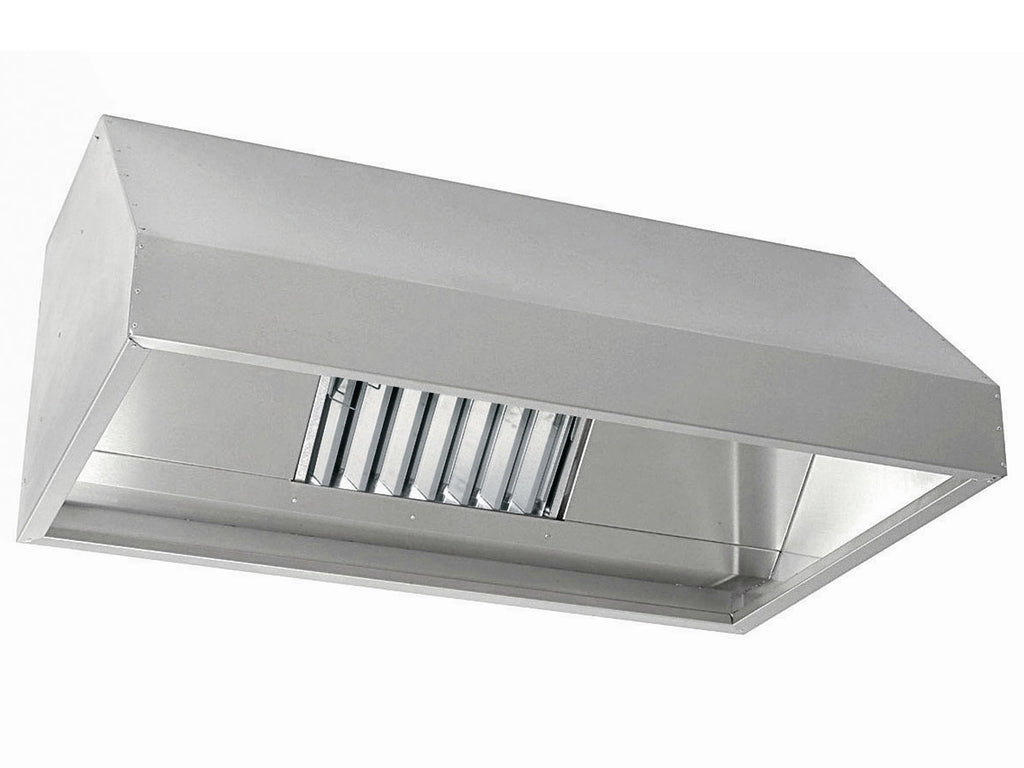
The Parry ST1050 is a low-profile extraction canopy built for commercial settings where overhead clearance is limited or where a full-depth canopy would be disproportionate to the cooking load. Constructed...
Specifications
- External depth mm
- 810
- External height mm
- 500
- External width mm
- 1000
Downloads
Parry Snack Extraction Canopy ManualProduct Description
The Parry ST1050 is a low-profile extraction canopy built for commercial settings where overhead clearance is limited or where a full-depth canopy would be disproportionate to the cooking load. Constructed throughout in satin-finish stainless steel, it is intended to sit above lighter cooking equipment — snack bars, sandwich counters, staff canteens, small prep kitchens, and similar environments where space is tight and cooking volumes are modest rather than heavy.
Effective extraction depends on maintaining consistent capture velocity across the cooking zone. The ST1050's shallow profile allows it to be mounted closer to the cooking surface in constrained spaces, which supports reliable capture without the ceiling clearance that deeper canopies require. It is well suited to light-duty cooking rather than sustained high-volume frying or heavy grilling, where a more substantial canopy would be the better choice.
Day-to-day hygiene maintenance is practical and quick, which matters in kitchens where cleaning time between services is limited. Key operational advantages include:
- Baffle filters removable for commercial dishwasher cleaning
- Lift-out fat collection drawer for straightforward sink cleaning
- Satin-finish stainless steel surfaces that wipe down easily between services
- Robust construction suited to regular commercial use
The ST1050 is supplied without an extraction fan, which is specified and sourced separately. Fan selection — internal or external — will depend on your building layout, duct run length, and the equipment sitting beneath the canopy. It is worth working through make-up air requirements and any applicable building regulations before installation, ideally with input from a ventilation engineer or installer.
If you are unsure whether this canopy is the right fit for your space, cooking setup, or extraction system, the team is happy to talk through the details before you commit.
Key Features
- Low-profile stainless steel canopy designed for restricted ceiling heights
- Removable baffle filters compatible with commercial dishwasher cleaning
- Lift-out fat collection drawer for quick and easy maintenance
- Satin-finish stainless steel construction throughout for durability
- Exhaust outlet positioned to allow flexibility in duct routing
Operational Benefits
- Fits into low-clearance spaces where standard canopies cannot be installed
- Reduces cleaning time with easily removable, dishwasher-safe baffle filters
- Keeps fat residue contained, supporting kitchen hygiene between services
- Proportionate extraction solution for light cooking without over-specifying kit
- Flexible outlet positioning helps simplify duct planning during installation
Specifications
- External depth mm
- 810
- External height mm
- 500
- External width mm
- 1000
Downloads
Parry Snack Extraction Canopy ManualFrequently Asked Questions
- The ST1050 is designed for light commercial cooking loads — panini grills, small fryers, contact grills, and similar equipment found in snack bars, staff canteens, and sandwich counters. It is not intended for heavy-duty cooking environments with sustained high-volume frying or large chargrills, where a higher-capacity canopy with greater extraction performance would be more appropriate.
- No — the ST1050 is the canopy only. The extraction fan is specified and sourced separately, and can be configured as either an inline or external unit depending on your building layout and duct run. Fan sizing should be matched to the canopy dimensions and the equipment beneath it, so it is worth getting this confirmed before purchasing.
- Beyond the fan and ductwork, you will need to consider make-up air provision, duct routing, and compliance with any applicable local building regulations or planning requirements for ventilation systems. If you are installing into an existing building with limited ceiling void or restricted duct access, it is worth reviewing the layout with your installer before ordering.