
EWC Automatic Hot Water Softener for Warewashing
Product Description
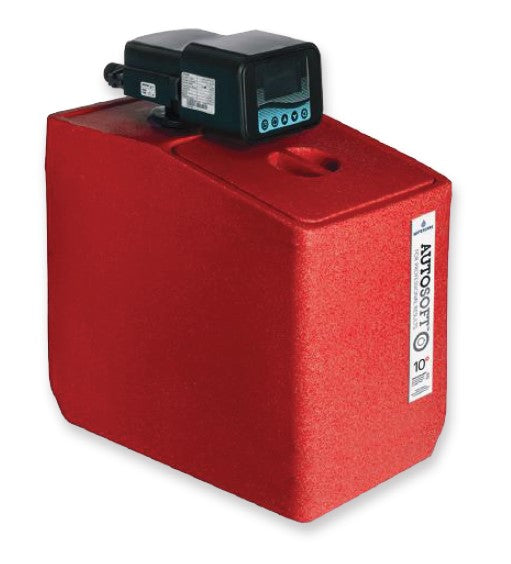
The EWC Automatic Hot Water Softener is a timer-controlled inline unit designed to treat the hot water supply feeding commercial dishwashers, glasswashers, and similar warewashing equipment. It works by exchanging...
Specifications
Downloads
Product Description
The EWC Automatic Hot Water Softener is a timer-controlled inline unit designed to treat the hot water supply feeding commercial dishwashers, glasswashers, and similar warewashing equipment. It works by exchanging the calcium and magnesium ions responsible for water hardness with sodium ions, delivering consistently softened water directly to connected appliances. This deals with limescale at source, rather than relying on rinse aid and chemical dosing to manage the effects after the fact.
Across the majority of UK hard water areas, untreated mains water causes progressive scale accumulation inside heating elements, wash arms, boilers, and internal pipework. Left unaddressed, this reduces heating efficiency, restricts water flow, produces uneven wash results, and accelerates wear on components that are costly to replace. Fitting a softener on the hot feed is one of the more straightforward protective measures an operator can take — and one that tends to pay back over time through reduced servicing and longer equipment life.
From a day-to-day standpoint, softened water brings a noticeable improvement in results, particularly on glassware where hard water leaves spotting and film that takes additional chemistry to counteract. The practical advantages include:
- Cleaner, spot-free results on glassware and crockery with reduced chemical reliance
- Lower risk of spray arm and element blockages causing unplanned engineer callouts
- Timer-controlled regeneration scheduled overnight, well away from service periods
- Supports manufacturer warranty compliance — many require adequate water treatment
- Reduced servicing costs over the working life of connected warewashing equipment
The unit sits inline on the hot water feed to the connected machine and requires a salt supply for regeneration. It is worth establishing your incoming water hardness before committing to a specification — in areas with moderate hardness, the operational benefit is real but more gradual than in very hard water regions such as London and the South East. Sites running multiple warewashing machines simultaneously, or operating at high volume throughout the day, may find it worth discussing whether a higher-capacity unit or a more centralised treatment approach is better suited to the demand.
If you are weighing up whether your site warrants a softener, or have questions about water hardness in your area and where to position the unit, the team is happy to talk it through before you commit.
Key Features
- Timer-controlled automatic regeneration keeps treatment consistent without manual intervention
- Ion exchange process removes calcium and magnesium ions at the hot water source
- Inline installation connects directly to the hot feed supplying warewashing equipment
- Salt-regenerated resin bed restores softening capacity for continuous long-term use
- Regeneration cycle timing adjustable to suit overnight scheduling away from service
Operational Benefits
- Protects heating elements and wash arms from progressive limescale accumulation
- Reduces frequency of engineer callouts caused by scale-related blockages and faults
- Improves glassware and crockery finish with fewer spots and less chemical input
- Helps maintain manufacturer warranty compliance by meeting water treatment requirements
- Lowers long-term servicing costs by extending the working life of connected equipment
Specifications
Downloads
Frequently Asked Questions
- The starting point is understanding your local water hardness, which varies significantly across the UK — areas in London, the South East, and the Midlands tend to be the most affected. If your dishwasher or glasswasher is showing early signs of scale on elements or wash arms, or if you are going through higher-than-expected volumes of rinse aid and chemicals, those are common indicators that untreated water hardness is working against you. Your water supplier can confirm hardness levels for your postcode, and the team can help you interpret what that means for your equipment.
- A single inline softener is typically specified per machine, treating the hot water feed to that appliance directly. For sites running multiple dishwashers or glasswashers — or where demand is particularly high throughout the day — it is worth discussing whether a higher-capacity unit or a centralised softening arrangement upstream of multiple appliances would be a more practical approach.
- The main ongoing requirement is keeping the salt reservoir topped up, as the resin bed relies on salt to regenerate its softening capacity. Regeneration itself is automated and timer-controlled, so it can be set to run overnight without affecting service. Beyond salt management, periodic checks on the unit and its connections are advisable, and the frequency will depend on your water hardness and throughput volume.