
Lincat LBM2W Wet Heat Bain Marie | Countertop Food Holding
Product Description
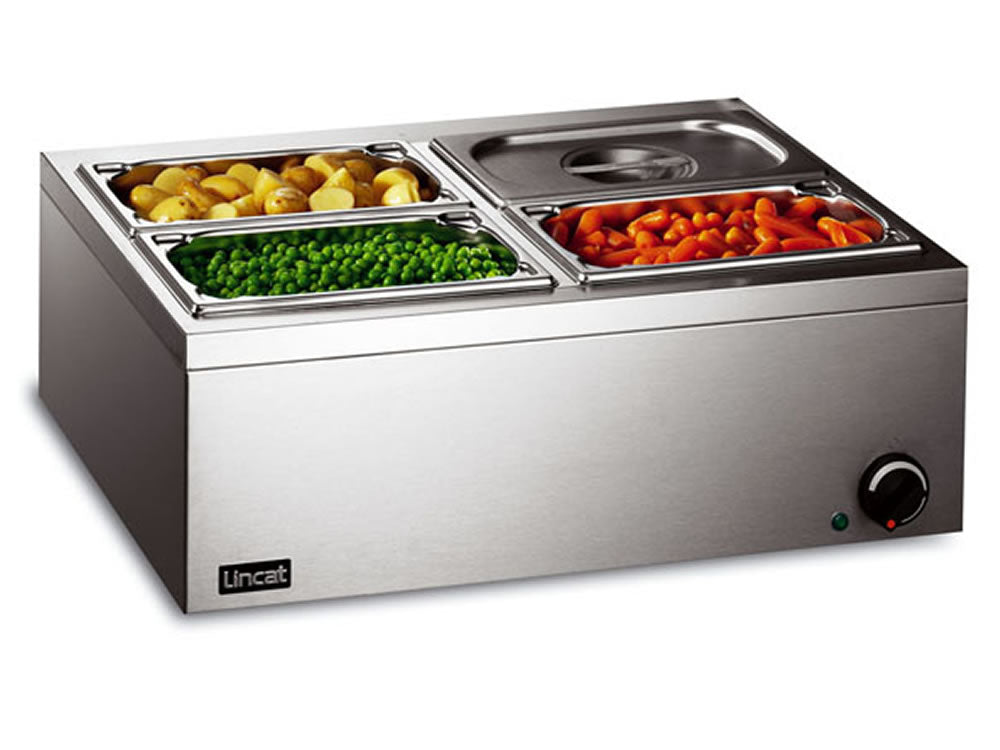
The Lincat LBM2W is a countertop electric bain marie that uses wet heat to hold pre-cooked food at safe serving temperatures throughout service. Rather than applying direct heat to the...
Specifications
- External depth (mm)
- 430
- External height (mm)
- 296
- External width (mm)
- 565
- Power rating (kw)
- 0.5
Product Description
The Lincat LBM2W is a countertop electric bain marie that uses wet heat to hold pre-cooked food at safe serving temperatures throughout service. Rather than applying direct heat to the containers, wet heat works by warming the water in the well, which in turn provides gentle, consistent warmth around the pans. This approach is particularly well suited to sauces, gravies, soups and vegetables, where the moist environment helps prevent the surface drying, skinning and crusting that can occur with dry heat alternatives during extended holds. The unit is supplied with four quarter-gastronorm pans and lids, making it ready for most countertop service configurations without additional purchases.
In a busy service environment, the quality of held food directly affects what reaches the customer. The wet heat method is well regarded for maintaining texture and appearance over the course of a service, particularly where dishes need to be held for extended periods and there is limited opportunity to refresh food between covers. The adjustable temperature control allows operators to dial in the appropriate holding level for different food types rather than running everything at a fixed output.
From a practical, day-to-day perspective, the LBM2W offers a number of operational advantages:
- Supplied with GN pans and lids — ready for service straight from the box
- Adjustable temperature control suits different food types and holding requirements
- Wet heat reduces surface drying and quality loss during extended service periods
- Compact countertop footprint suits serveries, carvery counters and back-bar setups
- Straightforward to drain, clean and reassemble between services
Installation is straightforward, requiring a standard mains connection. The well needs to be filled with water before use, and a warm-up period should be factored into service preparation. It is worth noting that wet heat operation does consume somewhat more energy than dry heat equivalents due to the water heating process — a consideration if running costs are a priority. The unit is designed for countertop use only and is not suitable for drop-in or floor-standing installation.
This model is well suited to smaller operations — cafés, pub kitchens, hotel breakfast services and compact carvery counters — where a practical, ready-to-use holding solution is needed without the scale of a multi-well unit. Sites with higher throughput or a greater number of dishes to hold simultaneously may find that a larger or multi-well configuration serves them better.
If you are weighing up wet heat versus dry heat holding for your menu, or want to talk through whether this unit suits your service volume, the team is happy to help you work it out.
Key Features
- Wet heat well holds food evenly using temperature-controlled water bath
- Supplied with four quarter-gastronorm pans and matching lids
- Adjustable thermostat allows precise control for different food types
- Compact countertop design fits serveries, carvery counters and back-bar use
- Simple drain and reassembly process supports efficient between-service cleaning
Operational Benefits
- Maintains food texture and appearance throughout extended service periods
- Ready to use from the box, reducing setup time before service
- Reduces surface drying and spoilage across sauces, soups and vegetables
- Flexible temperature settings help protect food quality across varied menus
- Minimal installation requirements keep setup straightforward for smaller operations
Specifications
- External depth (mm)
- 430
- External height (mm)
- 296
- External width (mm)
- 565
- Power rating (kw)
- 0.5
- Power type
- Electric 1 Phase
- Weight (kg)
- 12.5
Frequently Asked Questions
- Wet heat is generally preferred for moisture-sensitive foods such as sauces, gravies, soups and vegetables, as the moist environment helps prevent surface drying, skinning and crusting during extended holds. Dry heat alternatives can be more energy-efficient and suit foods where moisture retention is less critical, so the right choice depends on what you are holding and for how long.
- The LBM2W is a countertop electric unit that requires a standard mains connection — no specialist installation work is needed. The well must be filled with water before use, and you should allow adequate warm-up time before service begins. It is designed for countertop placement only and is not suitable for drop-in fitting or floor-standing use.
- It is well suited to smaller operations such as cafés, pub kitchens, hotel breakfast services and carvery counters where a compact, ready-to-use holding solution is needed. If you are running higher covers or need to hold a greater number of dishes simultaneously, a larger or multi-well unit is likely to serve you better — the team can help you assess the right capacity for your service.