
Roller Grill 400 CSG Gas Crêpe Machine
Product Description
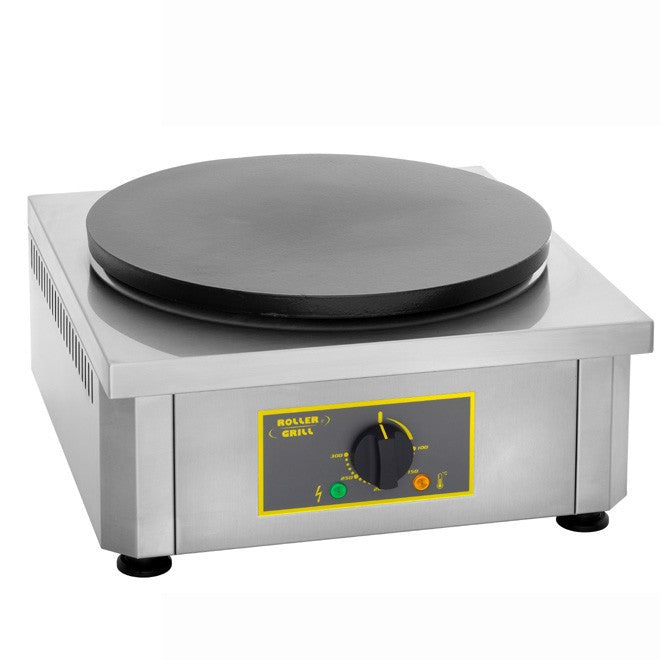
The Roller Grill 400 CSG is a standalone LPG gas crêpe machine built around a 400mm diameter cast iron cooking plate. It runs entirely on bottled gas, which means no...
Specifications
- Cooking surface (area)
- 400mm
- External depth (mm)
- 500
- External height (mm)
- 240
- External width (mm)
- 450
Product Description
The Roller Grill 400 CSG is a standalone LPG gas crêpe machine built around a 400mm diameter cast iron cooking plate. It runs entirely on bottled gas, which means no fixed electrical connection is needed — a practical consideration for mobile traders, outdoor events, and venues where a permanent power supply isn't always available or convenient.
The cast iron plate is specially treated with a hard enamel finish that provides reliable non-stick performance without requiring heavy seasoning or specialist preparation. The spiral heating element beneath distributes heat evenly across the full cooking surface, which is important when producing consistent crêpes at pace. Uneven heat is one of the most common causes of quality problems with crêpe service, so the design addresses something that genuinely matters in operation.
In practical terms, this machine suits lower-to-moderate volume service rather than high-throughput continuous production. It works well at food markets, pop-up catering, event hospitality, and in cafés where crêpes are part of a broader menu rather than the primary product. It also handles blinis and chapattis reasonably well, given the flat plate format.
- Gas operation removes the need for a power connection on site
- Hard enamel cast iron plate gives consistent non-stick results
- Even heat distribution reduces the risk of hot spots and inconsistent cooking
- Portable format suits mobile and temporary catering setups
- Simple to operate with minimal training required
Installation requirements are minimal — a stable surface and a compatible LPG supply are the main prerequisites. It is worth confirming your gas regulator and hose fittings are compatible before first use, particularly if the unit is moving between different event setups.
For operators running crêpes as a core menu item at high volume or in a fixed commercial kitchen environment, it is worth considering whether a larger or electric model might be more appropriate for the service demand involved.
If you are unsure whether this model suits your setup or volume, we are happy to talk it through.
Key Features
- LPG gas operation with no fixed electrical connection required
- 400mm diameter hard enamel cast iron cooking plate
- Spiral heating element designed for even heat distribution
- Portable standalone unit suitable for mobile catering use
- Compatible with crêpes, blinis, chapattis, and similar flatbreads
Operational Benefits
- Gas operation gives genuine flexibility for outdoor and event catering
- Even heat across the plate helps maintain consistent crêpe quality
- Hard enamel finish reduces sticking and simplifies plate cleaning
- Portable design allows quick relocation between service positions or venues
- Simple controls mean staff can produce consistent results with minimal training
Specifications
- Cooking surface (area)
- 400mm
- External depth (mm)
- 500
- External height (mm)
- 240
- External width (mm)
- 450
- Power type
- LPG
- Weight (kg)
- 23
Frequently Asked Questions
- The 400 CSG is well suited to light-to-moderate service volumes — food markets, event hospitality, and café menus where crêpes are one of several offerings. For operations where crêpes are the primary product and throughput is consistently high, a larger or more heavy-duty model is likely to be a better fit.
- The machine runs on LPG, making it compatible with standard bottled gas setups commonly used in mobile catering. Before use, check that your regulator, hose, and fittings are rated correctly for the appliance — this is especially important if the unit moves between different event sites with varying gas equipment.
- Yes, though its gas operation and portable format make it particularly practical for mobile or temporary setups. In a fixed kitchen it functions well as a secondary or theatre-cooking unit, but operators planning to use it as a primary production appliance in a permanent kitchen environment may want to consider an electric model that offers easier integration with existing kitchen infrastructure.