
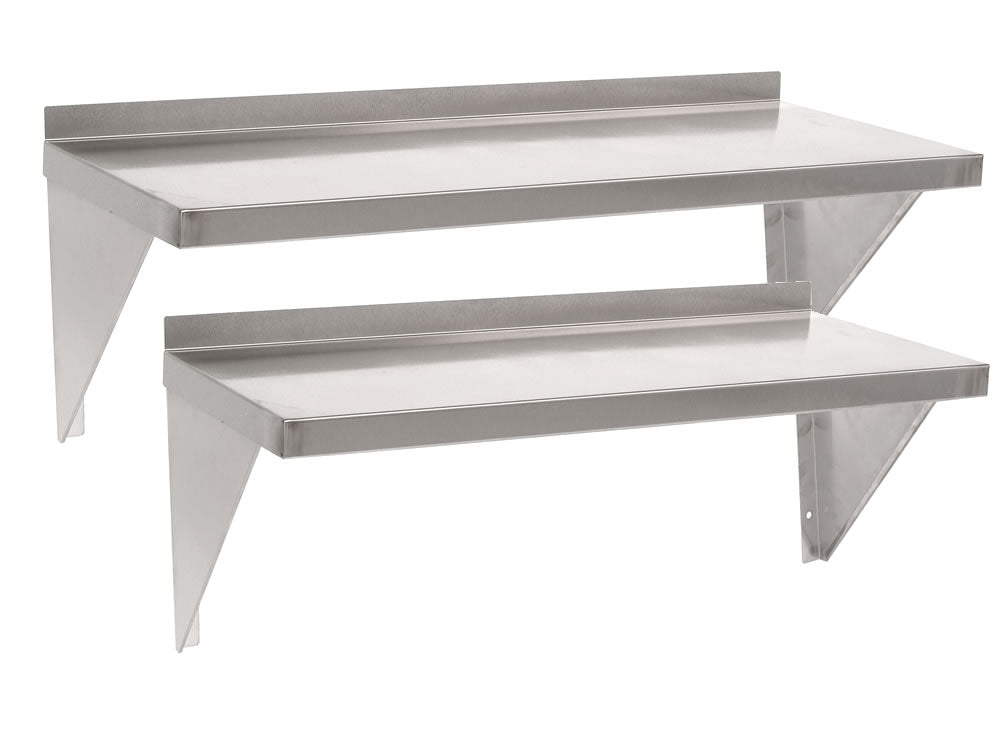
Parry 300mm Deep Stainless Steel Single Wall Shelf
Product Description
This is a wall-mounted single shelf from Parry, manufactured in stainless steel and available in a range of widths to suit different kitchen layouts. At 300mm deep, it provides a...
Specifications
Downloads
Product Description
This is a wall-mounted single shelf from Parry, manufactured in stainless steel and available in a range of widths to suit different kitchen layouts. At 300mm deep, it provides a practical overhead storage surface for dry goods, smallwares, and lightweight equipment without projecting excessively into the working space below.
In a busy commercial kitchen, keeping preparation surfaces clear is one of the more straightforward ways to improve workflow during service. Reliable wall storage means frequently used items have a fixed home above the work surface rather than competing for bench space. Stainless steel is the standard material for this environment — it tolerates heat, humidity, and repeated cleaning without deteriorating, and unlike painted or timber alternatives, it does not harbour bacteria in surface imperfections. Parry have been manufacturing commercial catering equipment in the UK since 1943, and this shelf reflects the functional, no-frills build quality that professional kitchen specification tends to require.
- Pre-drilled brackets included, simplifying wall fixing on site
- Available in multiple widths to fit runs of varying length
- Stainless steel construction resists corrosion and wipes down easily
- Low-profile depth suits most standard kitchen wall layouts
- Compatible with typical commercial wall surfaces and fixing methods
Installation is straightforward, though it is worth confirming the wall construction is suitable for the intended load before fixing. Masonry, blockwork, and solid partitions are generally appropriate; stud walls or dry-lining may require additional noggins or anchor plates. Position the shelf at a practical working height, clear of overhead heat sources and extraction ductwork.
This shelf is well suited to smaller commercial kitchens, prep areas, serveries, and back-of-house spaces where additional wall storage is needed without a significant outlay. If greater depth, a higher load rating, or a multi-tier shelving system with uprights is required, there are heavier-duty options in the range worth considering.
If you are weighing up which width works best for your layout, or whether a single shelf is the right solution for the space, we are happy to talk it through before you order.
Key Features
- Single-tier wall-mounted shelf in grade commercial stainless steel construction
- 300mm depth keeps shelf clear of work surfaces below
- Pre-drilled fixing brackets supplied for straightforward on-site installation
- Available across multiple widths to match varying kitchen wall runs
- Smooth stainless finish supports quick wipe-down between service periods
Operational Benefits
- Frees up preparation surfaces by relocating smallwares to wall storage
- Stainless construction withstands kitchen humidity without rusting or deteriorating
- Multiple width options reduce the need for cutting or adapting on site
- Low-profile depth avoids restricting headroom in tighter kitchen environments
- Simple bracket fixing keeps installation time and labour costs to a minimum
Specifications
Downloads
Frequently Asked Questions
- Measure the available wall space between any fixed obstructions such as extraction canopies, pipework, or wall-mounted equipment, and allow a small tolerance at each end for bracket clearance. If you are planning a continuous run across multiple widths, it is worth thinking about how the brackets will land relative to any tiling joints or service penetrations in the wall.
- Masonry, blockwork, and solid concrete partitions are the most straightforward — standard anchor fixings will handle the load without additional preparation. Stud walls or dry-lined partitions can work, but you will need to locate the studs or install noggins first, particularly if the shelf will carry anything heavier than dry goods or small utensils.
- A single shelf works well for back-of-house areas where storage needs are limited and wall space is at a premium. If you need to store larger volumes of dry goods, GN containers, or heavier equipment off the floor, a multi-tier shelving unit with uprights will generally offer better capacity and stability for the investment.